Research
Neuroscience (Biological Sciences)
Groundbreaking research discovering new neural pathways
Neuroscience in the School of Biological Science investigates how neurons function at the molecular and cellular level, their ability to regenerate and restore, and their role in perception and processing. There are two major research areas of neuroscience:
Comparative neurobiology and neuroecology
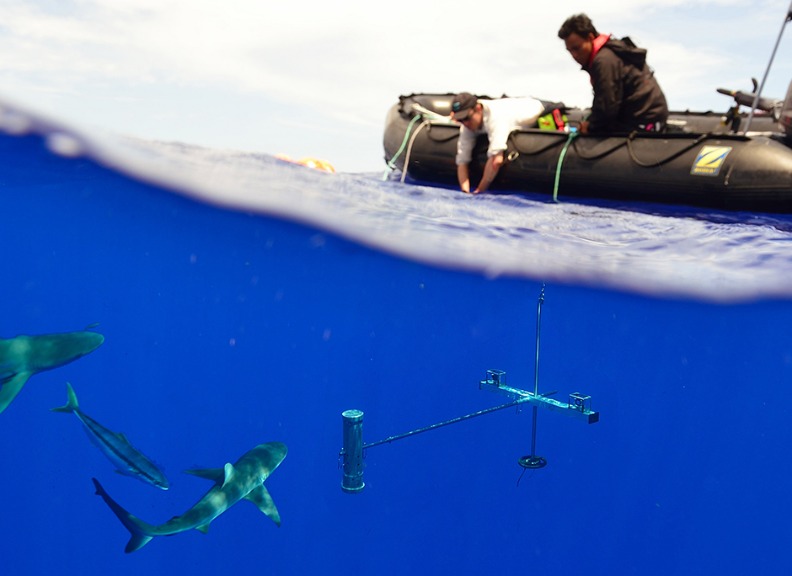
We are a multidisciplinary team working in the School of Biological Sciences to decipher and understand how animals perceive and process sensory input from the natural world, under different environmental conditions. Our research group integrates approaches and scientific methods from the fields of neurobiology, animal behaviour and ecology to understand the interactions of animals with their environment.
We are passionate about delivering high-quality research, as well as training the next generation of upcoming scientists interested in animal behaviour, sensory processing and the conservation of biodiversity. Some staff are based at the UWA Oceans Institute.
Experimental and regenerative neurosciences
Neurological conditions make up one-third of global disease burden, yet there are few effective treatments. Our team researches brain structure and function to promote functional recovery in various neurological conditions, including developmental brain disorders, traumatic injury and neurodegenerative diseases. Our researchers work closely with the School of Human Sciences and the Perron Institute for Neurological and Translational Science.
Neuroscience is also a major research strength in the School of Human Sciences, with interdisciplinary teaching and research spanning the two schools.
Comparative neurobiology and neuroecology research areas
Comparative neurobiology and neuroecology research is focused on six key research areas:
- Deep sea vision
-
Our Ocean Shot project “Discovery in the largest frontier: advance imaging and genomics of open ocean animals” aims to accelerate the process of species discovery, classification, and documentation in the deep, open ocean, or midwater, the largest and least explored habitat on earth. Our two primary objectives are: expediting species discovery/classification, and understanding the role of newly discovered species in oceanic processes. We focus on the evolution of visual systems, species descriptions, and functional morphology in the deep sea.
Key staff contacts
- The neuroethology of predator avoidance
-
Animals cannot survive without exposing themselves to the threat of predation. The need to feed, mate and migrate brings them into the open, where they are under pressure to rapidly assess and act upon sensory information. We concentrate on how sensory information drives and shapes anti-predator responses in animals such as fiddler crabs.
Key staff contacts
- How animals see their world
-
We aim to understand how animals perceive their world and how this influences the amount and precision of information they can gather. Using state-of-the-art behavioural, physiological and anatomical techniques, we study what animals see in terms of colour, polarisation, and spatial and temporal resolution.
Key staff contacts
- Environmental imaging
-
Understanding what animals can see, and what information animals use to make decisions, also requires knowledge of the information provided by the environment. We use a range of imaging, light measurements, modelling and sophisticated video analysis techniques to quantify the environmental information animals can access.
Key staff contact
- Bioimaging of the nervous system
-
We use sophisticated approaches to image the peripheral and central nervous systems to understand the brain and sensory systems. Magnetic resonance imaging (MRI), microcomputed tomography (µCT) and confocal microscopy are used to investigate the structure of sensory systems, brain size, the organisation and evolution of the brain and the relative importance of different sensory brain regions.
Key staff contact
- Comparative sensory processing
-
We aim to understand the information processing capabilities of a range of model species across various senses, including hearing, olfaction, electroreception and vision. We characterise sensory capabilities, analyse sensory pathways, and try to understand the trade-offs between various behavioural and physiological sensory strategies.
Key staff contacts
Experimental and regenerative neurosciences research area
Experimental and regenerative neurosciences research is focused on abnormal brain development:
- Abnormal brain development
-
The brain is a highly complex organ. Errors that arise while circuits are being formed during development can lead to conditions such as cerebral palsy, schizophrenia, epilepsy, mental retardation, autism and dyslexia. We aim to understand how abnormal circuits arise and how they can be corrected using non-invasive therapies such as pulsed magnetic fields.
Key staff contact
Courses