

Postgraduate
Master of Infectious Diseases
Contact us
Address
Student Central
The University of Western Australia (M355), 35 Stirling Highway, Perth, Western Australia 6009
Telephone
131 UWA (131 892)
International
(+61 8) 6488 1000
Hours
Frequently asked questions
Events you may be interested in
Show more eventsCareers and further study
Explore the career opportunities available to you.
Career Pathways
Policy Analyst, Health Researcher, Health and Promotion Officer, Epidemiologist, Scientific Officer.
Information session - student and graduate panel

Q&A with Synat Keam
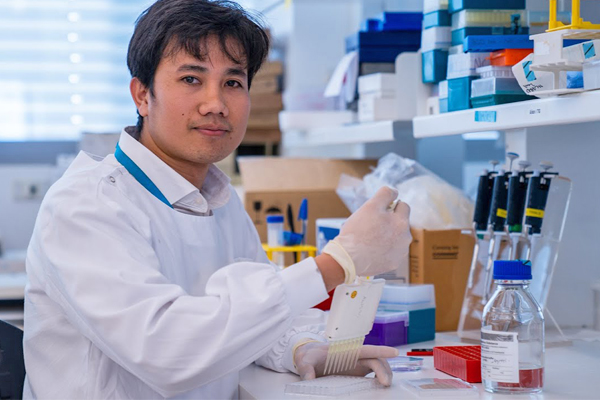
Q&A with Synat Keam
Tell us about your career / tell us about the role you are currently in?
Before I came to Australia for Master of Infectious Diseases (MID), I have worked as a contractual Tuberculosis (TB) laboratory specialist under cooperative agreement between US Centre for Disease Control and Prevention and the National Centre for Tuberculosis and Leprosy in Cambodia and then a laboratory supervisor in a district hospital under Ministry of Health. Currently, I am a second year PhD student at UWA National Centre for Asbestos Related Diseases (NCARD), working on one exciting project combining radiotherapy and immune checkpoint blockade immunotherapy in mesothelioma.
Why did you decide to study your course?
My decision to choose a cancer research project for my PhD stemmed from MID research project I undertook at Institute for Respiratory Health (IRH) where I used Immune checkpoint blockade immunotherapy to enhance the T cell activation and phagocytosis function of monocyte to clear bacterial infection in patients with chronic obstructive pulmonary disease (COPD). Checkpoint blockade immunotherapy is widely tested in cancer. However, it was only effective in less than 50 percent of patients and that made me become so interested to explore this immunotherapy further in one type of cancer called mesothelioma at UWA-NCARD to discover new ways to help patients respond to this immunotherapy. My PhD research uses low dose radiotherapy to remodel tumour blood vessels and precondition tumour microenvironment and that may help sensitize mesothelioma cancer to immunotherapy.
Why did you choose to study the Master of Infectious Diseases (MID) at UWA?
I have a background in laboratory sciences. Therefore, the Master of Infectious Diseases at UWA suited me so well because MID blends microbiology, immunology and public health epidemiology followed by almost 50 percent of in-depth laboratory sessions. I was able to study and review ranges of infectious pathogens that make us sick in greater details and learned to identify them in the laboratory. Another reason I went for MID was the fantastic opportunity to conduct real world medical research with world class researchers in Western Australia and that gave me a pathway for my current PhD research in Tumour Immunology at NCARD.
What did you most enjoy when studying the MID at UWA?
Although the Master of Infectious Diseases strongly focuses on microbiology and studying infectious pathogen, I may have been different from others as I enjoyed studying immunology the most compared to other units. My MID research project was also about respiratory immunology in COPD patients. I made lots of new friends from different countries and also local students. We formed a group and discussed things we did not understand. That makes me feel very satisfied and enjoyed during my MID study at UWA.
Can you tell us about your MID research project/dissertation?
I did one year research project titled “Anti-bacterial monocyte and T cell responses in patients with chronic obstructive pulmonary disease” at Institute for Respiratory Health. COPD patients are highly susceptible to bacterial infection and that can lead to acute exacerbation of COPD, which is life threatening. My project examined whether immune checkpoint blockade immunotherapy could activate T cells specifically Th1 subset and enhanced the phagocytosis by monocytes against the bacterial infection using peripheral blood mononuclear cells from patients with COPD.
What part of the MID course do you think prepared you the most for your current role? (if applicable)
The MID research project definitely prepared me most for my current role as a PhD student at NCARD. I was very fortunate to get a project at Institute for Respiratory health during my MID study. The supervisors were very supportive and I was able to successfully complete two semesters of research work with high distinction and that has paved me way to my current tumour immunology research at NCARD.
What tips can you share about finding a job after university? (if applicable)
Finding a job can be challenging for every graduate. However, I believe the MID equips students with diverse skill sets in medical science careers. Graduating with the Master of infectious diseases offers flexibilities in career options ranging from working for diagnostic / research laboratories, public health, clinical trials to industry. I encourage all students to maintain a good communication with supervisors / colleagues at MID and attend career fairs and communicate with leaders in the field to discuss career options. New graduates may also consider doing volunteer jobs in research laboratories to obtain some experience. What’s more, as the job market is narrow and highly competitive, students should consider adding extra skills to their CV and one I would recommend in the current context is being able to use programming languages for data sciences (R and python) and learn statistics in addition to your core skills.
On reflection, is there anything that you would have done differently during your MID degree or research project?
I enjoyed research more compared to course work during MID although I have to work twice harder to complete the project within restricted timeline. However, there was another part of the MID project I could not complete, which was the quantification of cytokine releases from supernatant. I wish I had optimized the cytokine release assay concurrently with flow cytometry based phagocytosis assay so that I could examine whether the application of immune checkpoint blockade immunotherapy induces patient PBMC to produce more inflammatory or immunosuppressive cytokines after they were challenged with bacteria.
What information would you share with someone who is considering studying the MID but still isn’t sure?
If students are considering to pursue their postgraduate study in medical science, the Master of Infectious Diseases should be one of your options. The demand for infectious disease specialists are greatly increased as the world is frequently affected by infectious disease outbreaks. Through MID, you will expose yourselves to a variety of subject areas in infectious diseases and that will prepare you better for vast career options in Medical Sciences. Moreover, if you love research, MID also prepares you better for a PhD degree through MID research project you undertake. I love research and now I am now doing my PhD in cancer.
What is your career ambition - where would you like to be in 5 or 10 years’ time?
I wanted to be a great scientist and keen to stay in cancer research longer because despite many years of research, a cure for cancer has not been found yet. Therefore, I am interested to investigate further into the complexity of cancer and hope to help patients live longer and enhance their quality of life. In the next 5 or 10 years, I wish to have my own cancer research laboratory in my home country, Cambodia, and help introduce new treatments for patients through clinical trials.
What extracurricular activities did you participate in whilst studying (clubs or groups on campus)?
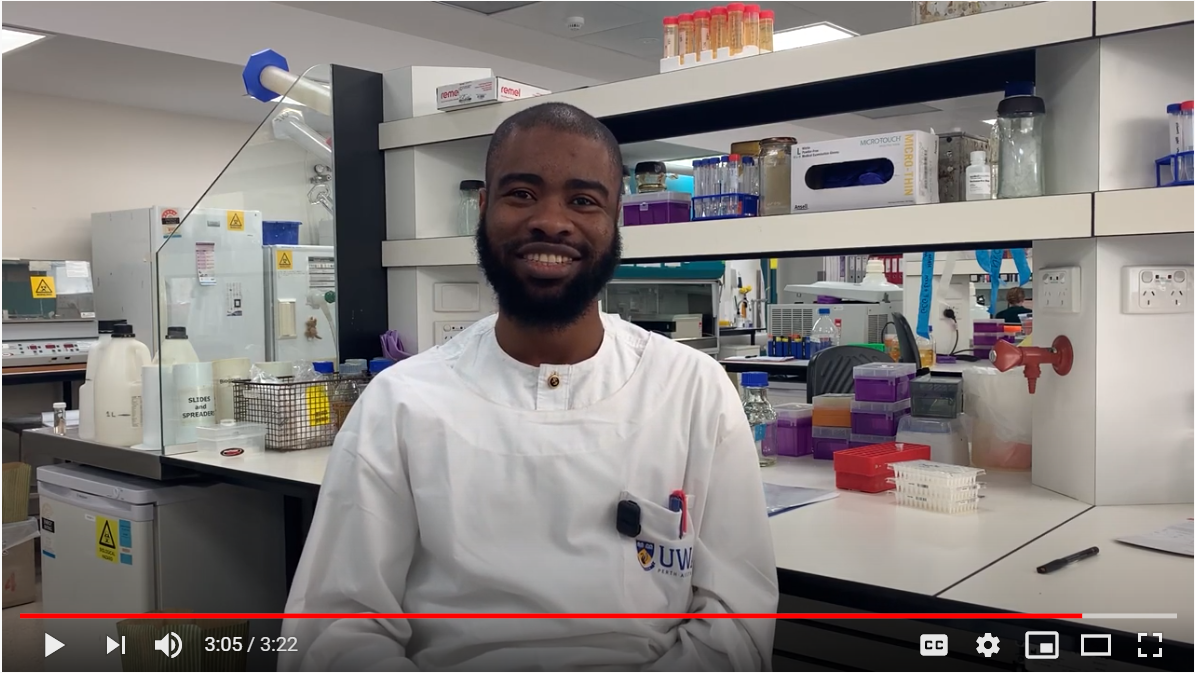
I am a member of UWA sport and have a volleyball team of around 15 people. We play every Friday evening.Hisham Osumanu
Further Study
Fees and scholarships
Learn more about the fees that apply to you for this course.
Domestic Student Fees
For Commonwealth-supported places, student contribution amounts are charged by unit, based on area of study. For a fee estimate, go to the Fee Calculator and select “I want to price my units”. Fees are subject to annual indexation. Refer to the Handbook to identify the units required. More information on how fees are calculated.
Scholarships
Scholarships are available to students from a diverse range of backgrounds, including academic achievement, financial need, educational disadvantage, leadership and community service, artistic or sporting achievements, and being from a rural or remote area.
Cost of living
International Student Fees
Onshore international students are charged an annual course fee, charged per credit point at a rate dependent on the course in which the student is enrolled. Annual course fees are calculated based on an annual study load. Check the handbook to confirm the annual study load for your course.
Find out more about international student tuition fees and visit the fee calculator for the relevant course fees.
Fees are subject to annual indexation.
Scholarships
Scholarships are available to students from a diverse range of backgrounds, including academic achievement, financial need, educational disadvantage, leadership and community service, artistic or sporting achievements, and being from a rural or remote area.
Cost of living
Admission requirements
If you’re interested in furthering your career by studying this postgraduate course, find out the admission details below
Admission Requirements
(a) a relevant bachelor's degree1, or an equivalent qualification, as recognised by UWA;
and
(b)(i) the equivalent of a UWA weighted average mark of at least 60 per cent in the Level 3 units; or
(ii) at least three years of relevant full-time professional experience; or
(iii) evidence of adequate research outputs, as recognised by UWA.
And
(c) for students who have completed 48 points of the Graduate Diploma in Infectious Diseases, a course UWA weighted average mark of at least 60 percent
1A relevant bachelor's degree includes a Bachelor of Biomedical Sciences, or Bachelor of Science in a biomedical or biological discipline, Bachelor of Medicine and Bachelor of Surgery, Bachelor of Dental Science, or a bachelor's degree in applied biomedical science or public health (medical technology, nursing, pharmacy, public health, and veterinary science).
Ranking and Selection Process
(a) The grade point average (GPA) of the most recent two years full time equivalent study within a relevant degree; and
(b) The intake quota for the year
English competency
English is the language of instruction and assessment at UWA and you will need to meet the English language requirements of the University to be eligible for a place.
Minimum overall IELTS score of 6.5, with no band less than 6.0.
How to apply

Ready for the next step?
Find out how to apply through our simple online application process.
We'll guide you through our entry requirements, admission pathways available to you and application deadlines for your chosen course.
We can’t wait for you to join us!
Course details
Gain advanced training and knowledge in the pathogenesis, diagnosis, treatment and prevention of infectious diseases – skills in demand in today’s constantly changing health landscape.
One of only a few courses in the world to offer a combination of coursework and research units, you will be equipped with a diverse range of work-ready skills.
 This course is subsidised for Australian residents through Commonwealth Supported Places (CSP). Visit our fee calculator for CSP rates and an estimate on your course fees.
About the course
Quick details
- Available
- Perth (Crawley campus)
- Full-time
- Part-time
- On-campus
- Semester 1
- The estimated time commitment for a standard full-time enrolment is approximately 46 hours per week (over 13 weeks) which includes contact hours, personal study and examinations.
- Postgraduate
- 54540
- 107726F
Important dates
INTAKE PERIODS
- Semester 1, 2027
APPLICATION OPEN
- Domestic applications open 1 August 2026
- International applications open 1 April 2026
APPLICATION CLOSE
- Domestic applications close 31 January 2027
- International applications close 31 January 2027
Refer to Admissions Requirements for information on eligibility criteria and how to apply.
Course structure
Postgraduate coursework degrees and combined (coursework and research) degrees comprise a number of units. Refer to the course structure for more information.
Study options in Infectious Diseases
UWA also offers the following courses to advance your career.
Public Health Focus
Sarah Bodewes
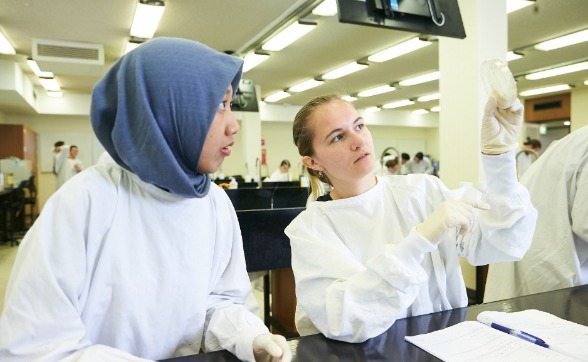
Sarah Bodewes
I have always been highly interested in microbiology; the concept of disease interests me so when I was searching for a degree I knew the UWA Master of Infectious Diseases was the one for me. One aspect of the course I enjoyed was the research project I undertook. I was able to learn many new skills and obtain a new understanding of diseases, plus working with the staff at PathWest was very rewarding.
The exposure we receive to guest lecturers is fantastic. Not only do we meet a lot of professional people who are working in their field, they are also highly enthusiastic about their topic of interest. This makes listening to lectures so much more enjoyable as you are always captivated. I would like to continue my career in a laboratory setting, either diagnostic or research based.
UWA Health Campus and QEII Medical Centre
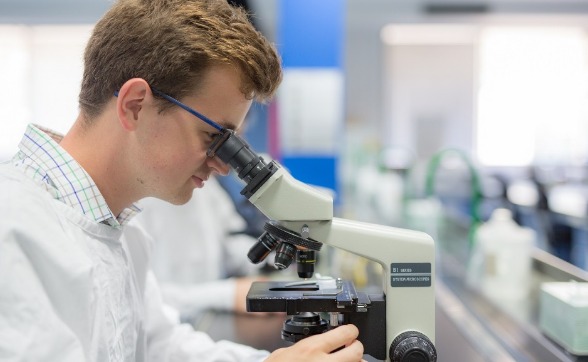
UWA Health Campus and QEII Medical Centre
Why study infectious diseases at UWA?
- Gain a deep and broad knowledge of infectious diseases to use in many medically related career fields including diagnostics, clinical work, public health governance, and research.
- Benefit from more than 150 hours of laboratory training in the first year alone, gaining significant laboratory skills during coursework units. You’ll also have the opportunity to gain additional hands-on experience in research laboratories across Australia or overseas through research projects.
- Eligible students have the option to undertake a full time research project over one or two semesters. These projects provide the research preparation that is required for students considering applying for PhD studies.
You'll learn
- To understand the nature and control of infectious diseases and their associated microbial pathogens.
- Research skills and to demonstrate knowledge of research principles and methods in infectious diseases from research leaders and industry professionals.
- Technical and laboratory skills in professional practice related to infectious diseases, microbiology and immunology.