






Minderoo OceanOmics Centre at UWA
Applying marine genomics to transform ocean conservation
A partnership between


OceanOmics Centre staff work closely alongside research and teaching staff from various UWA academic schools and the Oceans Institute in the nearby IOMRC building.
ENVIRONMENTAL DNA
Environmental DNA (eDNA) refers to the traces of genetic material that organisms shed into their surroundings via sloughed skin cells or scales, waste, mucus, or other biological matter. By collecting environmental samples such as seawater, we can target these DNA fragments to identify which species were recently present in any ecosystem. This non-invasive technique enables high-resolution biodiversity monitoring across extensive spatial scales, without the need for direct observation or physical collection. At the OceanOmics Centre, we have sampled across Australia’s marine regions and are now using eDNA to characterise marine biodiversity from across the Tree of Life, from shallow coastal environments to the deep sea, generating critical data to support conservation research, ecosystem management, and marine policy.
REFERENCE GENOMIC RESOURCES
Characterising biodiversity based on eDNA requires comparison with a library of reference DNA sequences. Snippets of DNA found in the environment can then be checked against this library to identify all the species present in the samples. At program conception, fewer than four per cent of the ~20,000 known species of marine vertebrates were represented by a reference-quality whole genome sequence in public sequence repositories. With our collaborators, OceanOmics Centre is creating high-quality, publicly accessible reference genomic resources for thousands of marine species and showcasing how whole genome data can inform our understanding of species biology and their conservation management.OCEANOMICS CENTRE FACILITIES & CAPABILITIES

Specialist genomics workflows

Fit-for-purpose lab spaces

Dedicated operational, scientific and research staff

Sequencing technologies

Research collaboration
OceanomicS CENTRE TEAM MEMBERS

Shannon Corrigan
OCEANOMICS CENTRE LEAD
Dr Shannon Corrigan is an empirical biologist that uses modern genomics approaches to pursue broad research interests that include the evolutionary biology, ecology, and conservation of marine vertebrates, particularly chondrichthyans (cartilaginous fishes: sharks, rays, chimaeras).
Current research activities include leading the OceanOmics Centre team to develop eDNA as a scalable biomonitoring tool and generating high-quality reference genome resources for marine vertebrates.
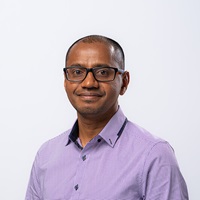
Ibrahim Faseeh
MANAGER, RESEARCH OPERATIONSIbrahim has a strong background in quality assurance, operational management, and regulatory compliance within life science research.
Ibrahim’s primary focus is to ensure the smooth operations of OceanOmics Centre laboratories by establishing a commitment to health and safety, resource management, and sustainability.
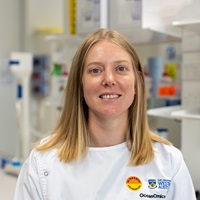
Emma de Jong
BIOINFORMATICS LEAD
Dr Emma de Jong is a bioinformatician and data scientist with expertise in systems biology/immunology. Emma’s current research focuses on generating high-quality reference genomes for Lutjanidae (snappers), a group of ecologically and economically important fisheries species, and using comparative genomics to map their immune gene repertoire.
By integrating genomics and immunology, her work aims to uncover how these species are equipped to respond to environmental stressors and pathogens, providing insights into their resilience in a changing climate. Emma also leads the OceanOmics Centre bioinformatics team.
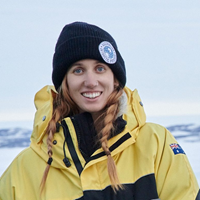
Georgia Nester
Research Fellow
Dr Georgia Nester is is a molecular ecologist leading deep-sea environmental DNA (eDNA) research at the Minderoo OceanOmics Centre at UWA. Her work develops and applies genomic tools to characterise biodiversity in some of the world's least explored marine ecosystems.
At the OceanOmics Centre, Georgia leads deep-sea eDNA initiatives and contributes to whole genome sequencing efforts, advancing new approaches for deep-sea biodiversity discovery and monitoring.
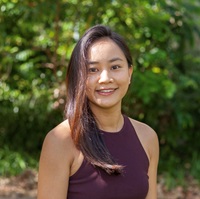
Sarah Kwong
Research Fellow
Sarah is a molecular ecologist interested in developing and applying novel genomic approaches for marine research. Her background spans environmental DNA (eDNA), long-read sequencing, and epigenetics.
At the OceanOmics Centre, she develops genomic methods that expand the capabilities of eDNA for marine biodiversity monitoring and conservation, with the goal of moving eDNA beyond species detection towards richer ecological and biological insights.
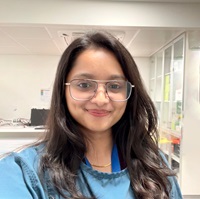
Abinaya Meenakshisundaram
Research Fellow
Abinaya is a conservation geneticist specialising in environmental DNA (eDNA), population genetics, and genomics, with a particular focus on whale sharks. Her research aims to develop non-invasive methods for monitoring the population genetics and abundance of marine megafauna using eDNA.
At the OceanOmics Centre, in collaboration with AIMS@UWA, Abi is developing species-specific DNA marker panels for whale sharks that can be sequenced from seawater to enable individual identification and estimates of genetic diversity and abundance of the species. She is also leading efforts to conduct a global whole-genome-based population genetic study of whale sharks to improve scientific knowledge and support conservation of this threatened species.
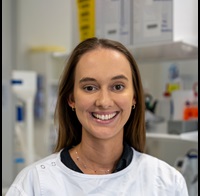
Adrianne Doran
LAB OPERATIONS LEADAdrianne is a molecular biologist with a background in clinical genomics. At OceanOmics Centre, Adrianne drives high throughput sequencing using long- and short-read sequencing technologies to construct eDNA biodiversity datasets and high-quality reference genome resources of marine vertebrates.
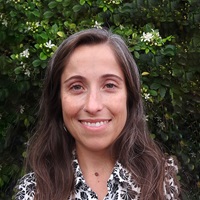
Rita Franco-Santos
PROJECT MANAGER, ENGAGEMENT PROGRAMS
Rita is a marine scientist with experience in various fields (mainly zooplankton (feeding) ecology and applications of biomarkers to food web and blue carbon research) and ecosystems (from the tropics to the poles). She is the project manager for engagement programs and training initiatives at the OceanOmics Centre. Rita also leads the Australia & New Zealand Node of the Early Career Ocean Professionals (ECOP) Programme (UN Ocean Decade) and is a Board Member for the Association for the Sciences of Limnology and Oceanography (ASLO).
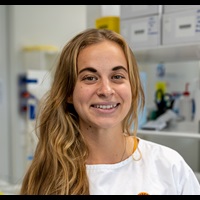
Laura Missen
SCIENTIFIC OFFICERLaura Missen is a marine biologist and molecular ecologist with a background in phylogenetics and environmental DNA.
At the OceanOmics Centre, Laura drives development and automation of laboratory techniques for eDNA metabarcoding of marine vertebrates and supports the generation of novel eDNA techniques along with high-quality reference genomes.
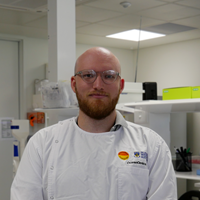
Liam Anstiss
SCIENTIFIC OFFICER
Liam Anstiss is a molecular scientist with a background in high throughput molecular diagnostics and environmental microbiology (biomining).
At OceanOmics Centre, his focus is on optimisation of whole genome sequencing workflows, to create reference genomes of marine vertebrates.

Ebony Thorpe
RESEARCH TECHNICIAN
Ebony is a marine science honours graduate with a background in aquaculture husbandry, parasite management, and sustainable production research. As a research technician at OceanOmics Centre, she supports deep-sea genomic and eDNA-based biodiversity surveys. With extensive at-sea experience, she plays a key role in field operations and is particularly interested in developing scalable genomic tools to better understand and protect deep-sea ecosystems.

Anna Depiazzi
RESEARCH TECHNICIANAnna Depiazzi is a conservation biology graduate with a background in animal health and wildlife biology. Anna is particularly passionate about conserving local biodiversity and is excited about the integration of molecular biology and genomic techniques in conservation science. At OceanOmics Centre, she contributes to a wide range of work, from field sampling through to eDNA and whole genome sequencing.
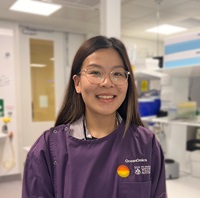
Tsz Ching Wong
Research Technician
Tsz Ching is a molecular scientist with experience in high-throughput molecular diagnostics, specialising in qPCR and sequencing. Prior to joining OceanOmics Centre, she worked in a clinical molecular laboratory supporting large-scale molecular testing and workflow optimisation.
At OceanOmics Centre, she contributes to the generation of high-quality reference genomes projects for marine vertebrates, from sample preparation through to sequencing.

Adam Bennett
Bioinformatics Research OfficerAdam is a computer scientist and bioinformatician. Adam is working on the development of analytical software, tools and pipelines to analyse eDNA and genomic sequencing data for better measuring and understanding life in our ocean.
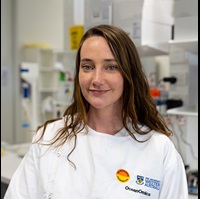
Lauren Huet
Bioinformatics Research OfficerLauren is a marine biologist and bioinformatician with a background in species identification and phylogenomics. At OceanOmics Centre, Lauren contributes to the generation of a high-quality reference genome library for marine vertebrates. Lauren is also particularly interested in exploring novel techniques for species identification and abundance estimates from eDNA samples.
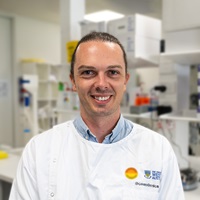
Tyler Peirce
Bioinformatics Research OfficerTyler is a marine biologist and bioinformatician with a background in genetics and transcriptomics. He is particularly interested in improving the accessibility, reproducibility, and scalability of genomics research. At the OceanOmics Centre, Tyler develops and maintains a centralised SQL database and automates genomic data processing pipelines to support a broad range of Centre activities, including the generation of high-quality reference genome sequences, as well as organising and integrating sequencing data from different technologies and a wide range of marine vertebrate species.
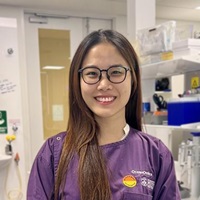
Olivia Nguyen
BIOINFORMATICS RESEARCH OFFICER
Olivia is a bioinformatician with a background in genomics and transcriptomics. She is particularly interested in the accessibility and reproducibility of genomics research and the responsible sharing of marine biodiversity data at scale.
At the OceanOmics Centre, Olivia is responsible for the release of reference genomes, mitogenomes, and eDNA data to global repositories including NCBI, ENA, OBIS, and GBIF, and contributes across a range of bioinformatics pipelines supporting eDNA metabarcoding analysis, reference genome generation, and mitogenome assembly across a wide range of marine vertebrate species.
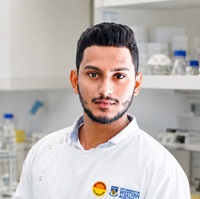
Anushka Sandeepa Dissanayaka M.
BIOINFORMATICS RESEARCH ASSISTANT
Anushka is a data scientist with interests in bioinformatics, data engineering, and research data management. At the OceanOmics Centre, he contributes to the development of data systems and workflows that improve the management, integration, and accessibility of eDNA and genomics datasets. His work focuses on database development, metadata management, data integration, and research data delivery.
He is currently involved in developing a centralised database framework that supports the organisation, tracking, and accessibility of genomic and environmental DNA data across OceanOmics Centre projects. Anushka is passionate about improving the accessibility, reproducibility, and long term value of scientific data through robust and sustainable data solutions.
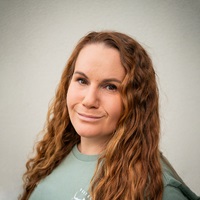
Frauke E. Ixfeld
LABORATORY RESEARCH ASSISTANT
Frauke is a Research Assistant with interests in environmental genomics, molecular ecology, and marine conservation.
At the OceanOmics Centre, she supports eDNA and genomic DNA laboratory workflows, contributing to sample processing, laboratory operations, and quality assurance. Drawing on experience across marine research, biodiversity monitoring, and data management, Frauke is particularly interested in using genomic technologies to better understand and conserve marine ecosystems.
Students
- Zoe Salyapongse, PhD Candidate
- Sara Krause, PhD Candidate
- Jessica Pearce, PhD Candidate (2023-present)
- Jamie Botting, MSc Candidate (2024)
- Seth Papirny, MSc Candidate
- Laura Sujecki, MSc Candidate
Visiting Researchers
- Dr Michael Bunce – Minderoo Foundation
- Dr Steve Burnell – Minderoo Foundation
- Dr Priscila Goncalves – Minderoo Foundation
- Dr Eric Raes – Minderoo Foundation
- Dr Matt Fraser – Minderoo Foundation
- Dr Jordan Goetze – Minderoo Foundation
- Dr Nicole Foster – Minderoo Foundation
- Marcelle Ayad – Minderoo Foundation
Alumni
Dr Lara Parata, Dr Philipp Bayer, Dr Madelyn Cooper,
Dr Julie Robidart, Dr Richard Edwards, Dr Sebastian Rauschert,
Dr Rachel Jamieson, Dr Sang Huynh, Hayley Hogan.
Explore with us
Looking to join our team? Over the coming years, there will be opportunities for students, professional and academic staff.
The OceanOmics Centre is multidisciplinary and welcomes new research collaborations. Join the Oceans Institute community to stay up to date with opportunities like this and more.
Reach out to us at [email protected]