
Creator-in-Residence Program Launched
Convocation and the UWA Library are collaborating to bring to life a new Creator-in-Residence Program to spotlight the Reid Library's library spaces and collections.
In today’s world, the role of libraries continues to evolve. Both libraries and museums are transforming the way people engage with history — making encounters with their collections more personal, tangible, and memorable. This shift reflects a wider trend in global cultural institutions, where static displays are giving way to experiences that prioritise connection, learning, and a sense of shared heritage
Fellowships for artists, writers and other creators are multiplying in North American, British and European libraries, whether they be major institutions such as the Smithsonian or the British Library, or university libraries, such as at Harvard, Yale and Oxford or in Australia, the Universities of Sydney, Melbourne, Newcastle and the University of Technology Sydney.
The Reid Library is no different. We invite you to support a new initiative at the heart of campus: a Convocation Creator-in-Residence Program that brings UWA’s unique historic treasures to life at the Reid Library through exhibitions, performances, lectures and digital installations.
Help us raise $100,000 to establish this initiative. Donate $1,000 or more and have your name or the name of a loved one recognised on a commemorative shelf in the new Reading Wall at Reid Library. Only 100 commemorative shelves are available and all donations are tax deductible. Donate here
We’re regularly highlighting a feature of the Reid Library to give you a sense of what might spark a Creator’s imagination and lead to an exhibition, performance, lecture or digital installation for us all to see and experience in the library.
Malleus Maleficarum

First published in 1486 in the German city of Speyer, the Malleus Maleficarum (The Hammer of Witches) explores the foundations of witchcraft, examines the activities of witches, and includes instructions for magistrates to identify, interrogate, convict and then execute supposed witches. It fuelled the paranoia and hysteria of the European witch hunts, served as a handbook for judges and witch hunters for centuries, contributing to the persecution of thousands of innocent people.
Originally written in Latin, the first English translation wasn’t until 1928. The Library’s copy from 1494 is an ‘incunabula’, a book printed in the early years after the invention of the printing press, which enabled it to spread rapidly throughout Europe. So much inspiration lies within the pages of this dark history for a Creator, from early printing techniques and typography to themes and narratives of knowledge, power, superstition and fear.
To draw a longer bow, it is extraordinary how the influence of Malleus Maleficarum 500 years ago seems to parallel the way disinformation spreads globally through social media today.
The Melville Papers: a window into the past
One standout among Reid Library's special collections is the Melville Papers, a fascinating archive of more than 2,000 pages chronicling the East India Company’s activities in 18th-century India. The documents cover everything from commerce and trade to shipbuilding and the procurement of rare materials. Among the collection’s gems is a letter dated December 31, 1786, addressed to Henry Dundas, first Viscount Melville, detailing a dramatic mutiny aboard the Royal Admiral Gravesend.
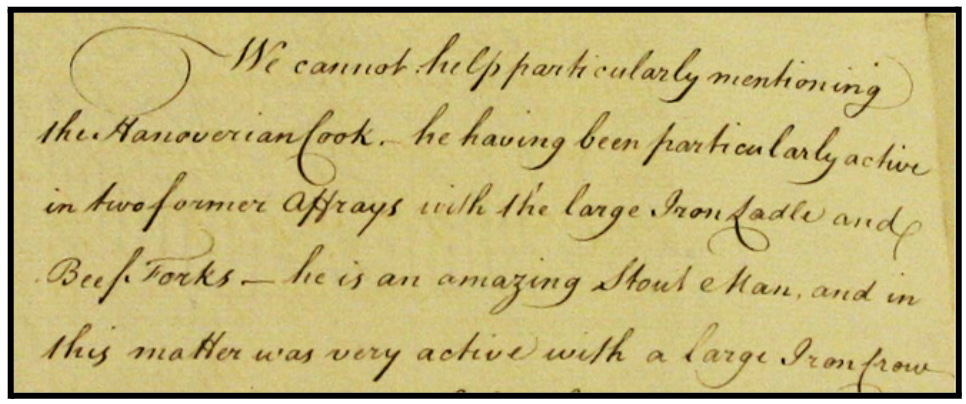
We cannot help particularly mentioning the Hanoverian Cook - he having been particularly active in two former affrays with the large Iron Ladle and Beef Forks - he is an amazing Stout Man, and in this matter was very active with a large Iron Crow…
Such vivid accounts offer a tantalizing glimpse into the past, providing fertile ground for creative interpretation. The Creator-in-Residence will be encouraged to draw inspiration from these stories, reimagining them for contemporary audiences and ensuring that the library’s hidden histories are brought to life in bold, innovative ways.