
School of Earth and Oceans
UWA’s School of Earth and Oceans is a group of internationally recognised educators and researchers who are passionate about understanding the diversity and complexity ancient geological and modern environments of Earth and the marine realm from the coast to the deep ocean. Western Australia has a geological record of ancient processes and environments over the last 4.5 billion years including the record of early life evolution and major mineral, energy and groundwater resources. Our research focuses on innovative resource discovery, especially critical resources, and sustainable use of these resources in a greener future. Western Australia’s spectacular coastline is a natural laboratory for engaging in fundamental and applied research to find solutions for the critical issues facing our oceans, coasts and estuaries.
The issues facing our lands and oceans are indeed complex and our School gives students not just the scientific knowledge they require, but the technology, resources, industry and community engagement that is essential for the future. We provide students with a science-based education and the know-how to form strong policy and governance to create a team of leaders ready to confront global issues. Our activities cover a wide range of fields of study including geology, geophysics, geochemistry, geobiology and marine ecology, hydrogeology, oceanography, hydrodynamics, offshore geotechnical engineering, and applied numerical modelling and geodata and ocean data analytics.
Ranked 3rd in Australia and 37th in the world for oceanography (GRAS 2024)
Ranked 1st in Australia and 25th in the world for marine/ocean engineering (GRAS 2024)
Ranked 49th in the world for geology (QS 2025)
Research
We work on a range of fundamental and applied research and teaching in the School of Earth Sciences, providing an impressive array of opportunities for staff and students.


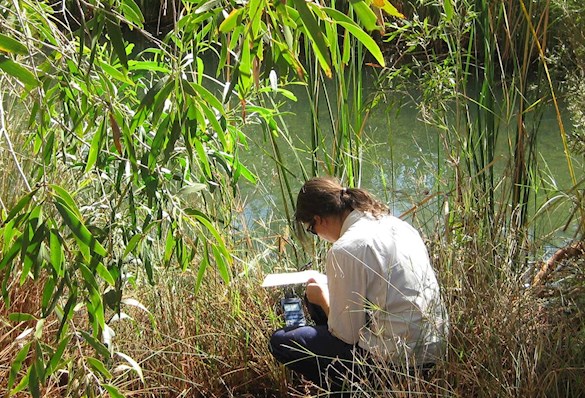

Oceanography:
Oceans sustain life, enable global trade, and power coastal economies. To harness them responsibly and advance the Blue Economy, graduates need expertise in ocean and coastal processes. Positioned on the Indian Ocean rim, Western Australia offers a unique living laboratory for world-class oceanography study and research at UWA
Hydrodynamics and Coastal Engineering
In coastal and deeper marine environments, the motion of seawater via the operation of currents, waves and tides, creates complex interactions in these natural systems. Application of this knowledge is critical for developing and managing infrastructure in coastal and nearby offshore zones.
Offshore Geotechnical Engineering
Increasing emphasis on renewable offshore wind and wave energy to meet net zero targets requires important application of engineering knowledge and skills to offshore foundational systems so that they can withstand high energy waves, currents and geohazards that may impacting structures such as wind turbines.
Marine Geoscience and Marine Ecology
Coastal zones and marine shelves, slopes and ocean basins are impacted by a wide range of physical, chemical and biological processes and requiring a wide range of techniques to gather important data about these processes interact. Shallow zones that support marine life are susceptible to changes in relative sea level and provide insight into past climatic and environmental changes as well as past human habitation.
Research partners
Our researchers work closely with business, industry and government partners to produce practical sustainability outcomes. Our School has well-established links with national and international universities, geoscience institutions in Australia, such as CSIRO and Geoscience Australia, and state government bodies. Our applied research and teaching is undertaken with industry partners across a range of resources including the minerals, energy and groundwater industries.
- CSIRO
- Geoscience Australia
- Department of Water and Environmental Regulation
- Minerals Research Institute of Western Australia
- Water Corporation
We also work with related facilities such as the Centre for Microscopy, Characterisation and Analysis and John de Laeter Centre.
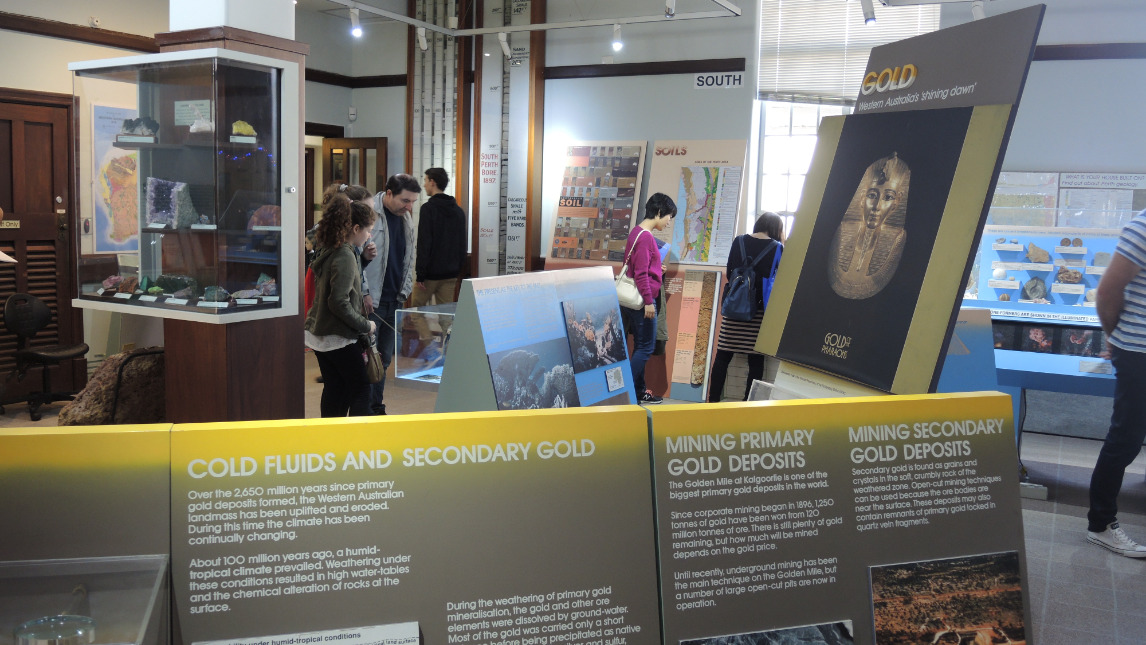
Edward de Courcy Clarke Earth Science Museum
This interactive museum allows visitors of all ages to discover and explore earth sciences. Several thousand visitors come to the Museum each year to learn about past environments, plants and animals, examine beautiful crystals, and enjoy rare experiences such as touching a meteorite, and handling some of Western Australia’s unusual minerals. The interactive sandbox is a great way to learn about Earth’s surface processes.
Our courses
Our strong and diverse research culture and dedication to learning supports students to develop their knowledge, technical and research skills in undergraduate majors and postgraduate courses for professional employment.
- Bachelors
-
Majors
Science graduates are in demand worldwide with job opportunities across a range of sectors. We offer majors in the comprehensive bachelor’s degrees that provide flexibility and the opportunity to undertake two majors. These majors focus on core competencies and industry-relevant skill development.
Extended MajorsPursuing an extended major in the specialised Bachelor of Earth Sciences will also provide you with a strong grounding in core competencies and industry-relevant skills. The extended majors have a carefully designed study plan to provide depth and breadth to meet career aspirations.
Honours in Earth ScienceThe Bachelor of Science Honours year is a great opportunity to develop more advanced technical skills and research skills (e.g. critical thinking, data analysis and writing) via a supervised project of your choice. Both sets of skills enhance employability in geoscience as well as providing a pathway to higher study and research career opportunities.
Combined Bachelor’s and Master’s (CBM)The Combined Bachelor's and Master's (CBM) is a four-year accelerated program for high-performing students. Over your first three years, you'll complete an extended major and a semester of more advanced study, followed by a final year of postgraduate study. On completion, you'll be awarded both a full bachelor's and a full master's degree in four years (2.5 + 1.5 years).
- Bachelor of Earth Sciences & Master of Geoscience (CBM)
- Bachelor of Earth Sciences & Master of Oceanography (CBM)
- Bachelor of Marine Science & Master of Oceanography (CBM)
The Geology Major within the Bachelor of Science, and the Earth Science Specialisation within the Bachelor of Science (Honours), has been endorsed by the Australian Institute of Mining and Metallurgy Board. Graduates of these courses are eligible to apply for Associate, Member and Fellow grades of AusIMM membership, with the appropriate level of experience.
35cd905c-6e2e-4809-b377-4db44fd226bb
- Masters
-
A master’s degree enables you to develop specialist skills and advanced knowledge in your field of choice. A master’s qualification can help you stand out from the crowd in a competitive job market. We offer an extensive range of master’s degrees in a number of related areas of study (1.5–2 years). You may also undertake a research project focusing on a topic that you choose.
- Master of Energy Geoscience
- Master of Geoscience
- Master of Hydrogeology
- Master of Oceanography
- Master of Ore Deposit Geology
More advanced study with a major research component provides an important opportunity to gain strong research skills to enhance employment opportunities, e.g. in industry or government, or create new opportunities to pursue a research career in government agencies and universities. The Master of Science is a one-year course that is ideal for students who want to advance their skills within a short timeframe, and also opens the pathway to PhD.
- Master of Science (by thesis and coursework)
- Master of Philosophy (MPhil)
- Doctor of Philosophy (PhD)
For honours and master’s research projects download the full lists below:
School of Earth and Oceans and Master’s Research Projects 2026
- Micro-credentials
-
Our micro-credentials focus on skills that are in high demand by employers and industry – they are short and affordable so you can easily fit them into your lifestyle, with the flexibility to pick and choose what works for you. During the year, micro-credentials are offered in teaching earth sciences, hydrogeology, structural geology (including a 1-week fieldtrip) and geophysical exploration.
Update, upskill or reskill; complete a one-off micro-credential or stack them up and convert into credit towards an undergraduate or postgraduate course – the choice is yours.
Find out more about the micro-credentials offered in Earth Sciences at UWA Plus.
- Scholarships
-
A range of scholarships are available to UWA students. Information for undergraduate and postgraduate coursework students and postgraduate research students is available here.
Specifically for geoscience, these scholarships are offered on an annual basis:
Higher Degree by Research opportunities and projects
Students who are interested in research projects should visit the Higher Degree by Research Application Portal and browse the Project Opportunities section.
All current projects and their supervisors are available in this Portal. This includes PhD and Master by research projects and scholarships. You can search by research areas or a specific school, see available scholarships and contact prospective supervisors. You can also directly contact a potential supervisor using the discipline links (above).
News
-
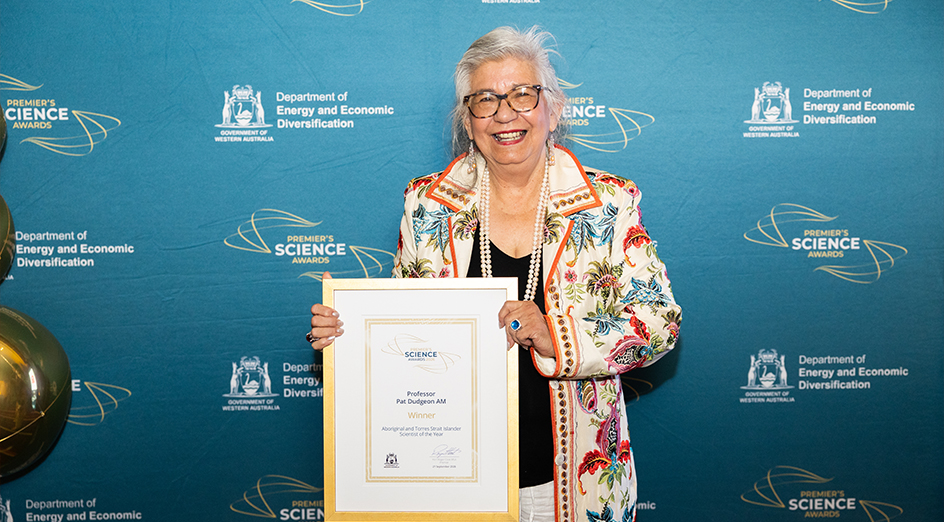
World-leading researchers honoured at 25th Premier's Science Awards
Tue, 22 Sep 2026
-

Aboriginal children helping tooth fairy on a mission
Tue, 18 Aug 2026
-
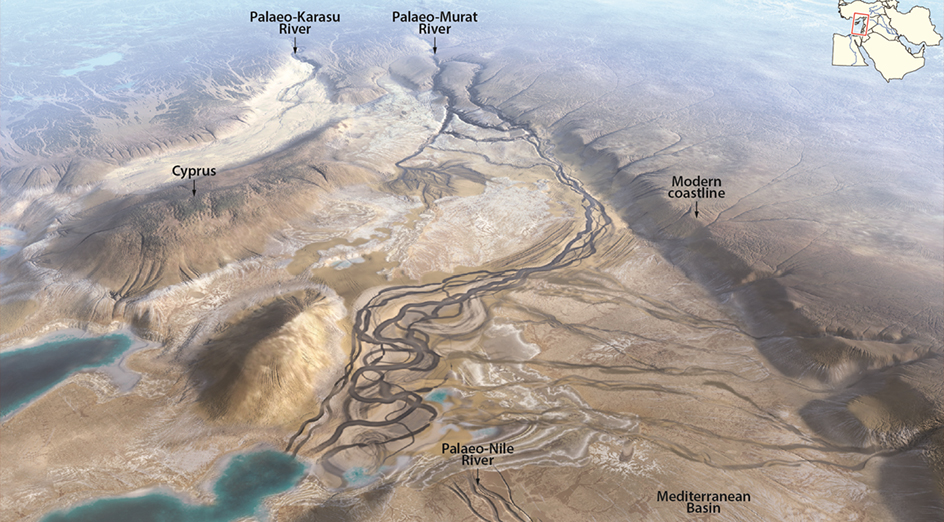
How two ancient rivers gave birth to the Euphrates
Wed, 3 Jun 2026