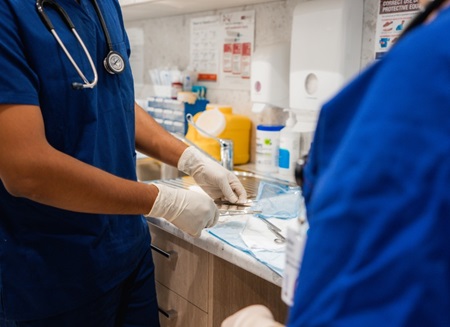
UWA Medical School's Centre for Medical Education (CMEd)
The Centre acts to connect disciplines, clinical sites, students, and external partners to build a strong, engaged medical education community. It collaborates with community members and clinicians, and supports interprofessional learning, aiming to strengthen relationships with partners in health and the allied health professions. The CMEd incorporates the Medical Educator Greenhouse—a space for gathering and developing early-career doctors-in training in their journey in Medical Education, while facilitating their teaching of medical students in clinical placements.
Through the Greenhouse and its Faculty Development Program, the CMEd supports innovation in teaching and assessment, faculty development, educational scholarship, and leadership through all levels of medical education. Together, these functions ensure that UWA’s medical education is rigorous, responsive, and human-centred—developing not only competent clinicians, but reflective professionals, leaders, and educators who are equipped to serve patients, communities, and society.
History and past heads
Over the past decade, UWA’s Centre for Medical Education (formerly the Medical Education Unit, or MEU) has evolved from a relatively small academic support unit into a central driver of educational quality, innovation, and strategic development within the medical program. Under successive leadership teams, the unit has expanded its remit beyond traditional curriculum support to encompass assessment design and governance, program evaluation, accreditation preparedness, faculty development, educational scholarship, simulation and clinical teaching innovation, student support processes, and large-scale curriculum renewal. This growth has occurred alongside major transitions within the UWA medical program itself, including the move to the MD, increasing accreditation requirements, expansion of distributed and interprofessional learning models, and a stronger emphasis on evidence-based medical education. More recently, the transition from the MEU to the Centre for Medical Education has reflected both a maturation of the unit’s identity and a broader strategic vision: positioning medical education as a recognised academic discipline within the Medical School, while building stronger capability in educational leadership, research, quality improvement, and workforce development across Western Australia’s health system.
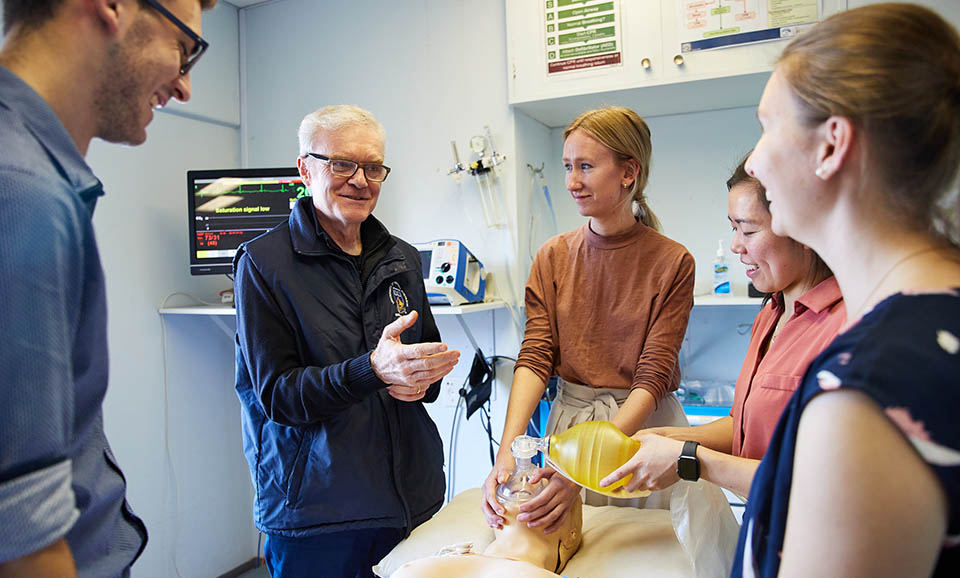
Information for clinical supervisors
Your role
Your role as a Clinical Supervisor
Both we and the student body greatly appreciate the teaching and support that comes from our wide network of clinical supervisors, be they on our staff, engaged in an adjunct role, part of the Med Ed Greenhouse, or just teaching because they’re passionate about their discipline and students. We’d like to take this opportunity to thank you for all that you do to help us develop excellent and patient-centred doctors.
Your role
Students change placements every 2-6 weeks, and whilst we determine their learning outcomes and mode of assessment, and set overall expectations in terms of their code of conduct, exactly what is expected of them across varied disciplines and multiple sites can be difficult for them to get their heads around. We’d appreciate you spending a few minutes when the students arrive outlining your expectations of them during their time with you.
Information that could be helpful includes:
- When you expect them to be present - do you expect them to be at every ward round? Do you expect them to attend team on-call days? Are there certain theatre lists, clinics, or MDT meetings you expect them to be present for? When and where should they meet you/the team for each of these activities?
- How you run your ward rounds (will you expect them to present a patient? Is there any core reading they should do in preparation?)
- Any teaching activities you or the team is planning, and any prep they need to do for it
- Arrangements for end-of-term sign off and assessments- including who they should arrange these with if you’re going to be caught up or away
Research conducted by our Medical School team shows that, in terms of professional identity, beliefs and conduct, students are impacted more by the role models they encounter whilst on clinical placement than by the teaching provided by the University. This means that, as a clinical supervisor, you have an incredible opportunity to shape the future members of the medical profession, and your interns of tomorrow, while they are with you on placement. You will do this in a number of ways:
- Belonging
-
We know that belonging strongly influences professional identity development, and yet students often feel like outsiders while they are on placement. Simple measures can make a huge difference in this area. Use their names, say hello to them when they show up to a ward round, theatre or MDT, give them small jobs (holding a patient file, looking up the patient’s obs, writing the progress note). Involving them like this takes seconds at most but will make a huge difference to the way they experience their placement and your specialty.
- Respect
-
Current students are future colleagues. Please respect them as you would expect to be respected by them.
- Teaching
-
Students really value learning from your expertise. Teaching doesn’t have to be onerous. It could be 3 minutes on a micro-topic during the ward round, sending the student to see one of the patients you are going to see in clinic or on the round first so they can present back to you when the time comes, a 20 minute bedside chat with a willing patient with signs, supervising them putting in a cannula, or a formal 30-60 minute tutorial.
Students in year 2 are still orientating themselves to the clinical environment, so think basic general knowledge. Rolemodelling patient-centred care is a great way to teach without any additional time investment. As students progress, learning can become more advanced. Remember that a second-year student has not yet developed clinical experience, and set your expectations accordingly. Gear your teaching to a final (fourth) year student at the level you’d expect of an intern, and remember that they’re preparing to sit their medical school final assessments, not your specialty’s fellowship exams. Go for what you think they need to know as an intern. Whilst Q&A remains an important part of learning, please be supportive and avoid humiliating students.
We have resources you can tap into if you want to ensure your teaching is geared to what our learners need, including core conditions, presentations, and learning outcomes. Visit the CMEd site or email the CMEd Operations Lead Wendy Lo to access these.
- Mentoring and support
-
Students appreciate guidance from experienced clinicians on navigating their new learning environment. If you’d like to mentor a student through their time at medical school as part of our longitudinal mentoring program, please contact our Mentoring team. You may also find that students approach you with concerns during their placement. Many of these you may be happy to address, however, we also appreciate there may be student concerns beyond your scope as a supervisor. We have a vast array of support mechanisms available for our students and we don’t expect you to be equipped to address all of these. If you find yourself in this position or are concerned about a student, you will find student support advice here.
- Assessments
-
Your students will need you to complete an end of term assessment towards the end of their time with you. These generally take 10 to 30 minutes to complete. Please be proactive with providing time to the students to do these, or delegate to an appropriate member of your team if you are not available. A mid-term check-in is not mandatory for the students, but it is a good way to find out how they are going and intervene in case of any issues early. You can find further information about assessment here.
- Accessibility
-
Students sometimes require modifications whilst on placement due to living with a disability. Most commonly in recent years, this has involved adjustments around hearing or vison impairment. Please do your best to accommodate these, and get in touch with the student’s Unit Coordinator if you have any questions or need support, for example to produce any physical handouts or teaching resources in a more accessible format. When running group sessions, please use a microphone if there is one available.
- Celebrating excellence
-
We regularly survey the students to understand how they’ve found their placement. This includes feedback about the supervisors they had and the teaching they attended or engaged with. Students have the opportunity to nominate ‘Excellent Educators’ during these feedback surveys, or at any other time using a central form. These student nominations are presented to the Discipline Leads at the end of the year, who will select a nominated “Excellent Educator” to receive an Excellence in Teaching Award. The award recipient will be invited to our annual Awards evening to receive their certificate which includes the student feedback.
Clinical assessment
Assessment in the MD Program
The broad purpose of assessment at the UWA Medical School is to ensure students become well rounded and highly competent practitioners through both their learning experiences and engagement during their studies. Assessment is a key driver of students’ learning. UWA’s Governance of Assessment Standards ensures that assessment processes and practices are consistent and maintain high standards, follow external higher education regulatory requirements, report performance against the specified learning outcomes, and are regularly evaluated (with feedback from staff, students and others).
MD Assessment Principles explained:
- Assessments contribute positively to students' learning
- Assessments are constructively aligned, designed and delivered
- Assessments develop the ability to make informed judgments through effective feedback
- Assessments are fair, valid, efficient, reliable and authentic
- Assessments are quality assured and sustainable

- Practical ways of ensuring these principles are enacted include:
-
- Starting every teaching session (tutorial, workshop, lecture) with learning outcomes describing what the session is aiming to teach (and therefore what we might assess)
- Giving specific and actionable feedback, whether the assessment is formative or summative
- Ensuring that all assessors are scoring assessments in the same way across sites
- What assessments are there in the MD Program
-
MD1 contains a lot of case-based assessments as part of clinical skills workshops and General Practice. MD1 students also have a single station clinical exam (OSCE ) and a 25-station practical exam (OSPE) assessing anatomy. They have written exams at the end of each system block.
The first half of MD2 contains the same assessments as in MD1. In the second half of MD2, as students start their hospital placements in June, they start a logbook of procedural skills, have to write a case report about a patient they’ve seen, have a 6-station clinical exam (OSCE), written exams, and also have assessments that are based around each of their clinical blocks. These placement assessments include Work-Based Assessments (WBAs- like the intern EPAs), Structured Clinical Cases (SCAs) and Professionalism assessments (PRFs).
MD3 continues the clinical placement assessments (WBAs, SCAs and PRFs) and the procedural skills log. There is a 10-station barrier OSCE at the end of IMP2, alongside written exams. MD4 is similar to MD3 in terms of the type of assessments students do during clinical placements and at the end of the year. There is a 12-station barrier OSCE at the end of IMP3. During Preparation for Internship, students also complete a couple of Prescribing Assessments, and will present a project based on one of the PLACES themes.
- What may I have to do as a Clinical Supervisor
-
If you are supervising students you may be asked to complete a Structured Clinical Assessment (SCA)[CM6], or Work-Based Assessment (WBA). The student can give you marking keys for both of these, and you can also find them here. Both these assessments are marked via online forms that the student will give you on their device.
Professionalism
All MD units have professional behaviour outcomes and assessment components; these are aligned with the MD Progress Rules, which form part of the MD Course Rules.
A Professional Behaviour Assessment process is important so that:
- The student may be given clear information about any problems identified so they have the opportunity to reflect, remediate and improve.
- Staff and supervisors can identify behaviours which may require student support, remediation or sanctions.
The MD program’s Professional Behaviour Assessment procedures and related forms outlined below can be found at: https://www.uwa.edu.au/schools/medicine/medical-education-unit
For the majority of students with no professionalism concerns identified, the Professionalism Rating Forms for MD2, 3 and 4 can be completed with a ‘Meets Expectations’ rating. In the absence of any documented professionalism concerns, the assumption will be that the student ‘Meets Expectations’.
Students who demonstrate exemplary behaviour should have ‘Exceeds Expectations’ ticked on the Global Professional Assessment parts of the Professional Behaviour Assessment form (PBA) for MD1 or the Professionalism Rating Form (PRF) for MD2, 3 and 4. The supervising clinician should provide a short comment in the section ‘Areas done especially well’ with the reason for the student exceeding professionalism expectations. The completed PBA/PRF forms are then given to the student for their records. Students who accrue excellent PRF forms across their placements become eligible for a Dean’s Letter of Commendation.
Student wellbeing
- What to do if you are concerned for a students wellbeing
-
- Speak to the student if you are comfortable and able to do so. Encourage them to get in touch with their Discipline Lead, Unit Coordinator, or Sub-Dean (our student support person for each year is called the Year Sub-Dean).
- Email the Discipline Lead to make them aware of your concerns.
- If you believe the student is at immediate significant risk, ask them if you can ring a next of kin, encourage them to go to the Emergency Department, or (if you are able), escort them there yourself. In the event of this happening, please also contact the appropriate Discipline Lead to make them aware.
For 2026, the Sub-Deans are:
- Year 1: Dr Zaza Lyons - [email protected]
- Year 2: Dr Joanne Stewart - [email protected]
- RCS Penultimate Year - Dr Sarah Moore - [email protected]
- Year 3: Dr Brett Montgomery - [email protected]
- Year 4: Dr Lucy Gilkes - [email protected]
- International Students: Dr Scott McCoombe - [email protected]
UWA medical students attending metro Perth clinical placements are able to access similar wellbeing supports as junior doctors (e.g. Employee Assistance Programs for counselling). Please contact your Discipline Lead for specific resources that students can access at the various health service providers, as these are site specific.
For help outside the MD program, UWA has a range of student support services, such as the Living Room, the Guild Student Assist program, the Counselling and Psychological Services, and the UWA Chaplain and Spiritual Services.
- Contact list
-
Year 2, July-Dec
Unit Coordinator
Chris Etherton-Beer
Email: [email protected]Administrator
Angela Hayter
Email: [email protected]Year 2 Discipline Leads
Boola Boola Djinda (Aboriginal Health)
Cheryl Bridge
Email: [email protected]Talila Milroy
Email: [email protected]General Practice
Anna Parker
Email: [email protected]General Surgery
John Salim
Email: [email protected]Internal Medicine
Kharis Burns
Email: [email protected]Geriatric Medicine
Chris Etherton-Beer
Email: [email protected]Psychiatry
Alexander John
Email: [email protected]Year 3
Unit Coordinator
Joanne Somerville
Email: [email protected]Administrator
Stephanie Gee
Email: [email protected]Year 3 Discipline Leads
Boola Boola Djinda (Aboriginal health)
General Practice
Email: [email protected]Richa Tayal
Email: [email protected]Urology
Dickon Hayne
Email: [email protected]Internal Medicine
Yuben Moodley
Email: [email protected]Obstetrics & Gynaecology
Jen Cumpsty
Email: [email protected]Suzanne Rosenberg
Email: [email protected]Ophthalmology
Hesson Razavi
Email: [email protected]Orthopaedics
Sam Shales
Email: [email protected]Christopher Jones
Email: [email protected]Paediatrics
Joanne Somerville
Email: [email protected]Psychiatry
Yulia Furlong
Email: [email protected]Year 4
Unit Coordinator
Neil Boudville
Email: [email protected]Administrator
Andrew Davey
Email: [email protected]Preparation for Internship
George Townsend
Email: [email protected]Administrator
Liss Edwards
Email: [email protected]Year 4 Discipline Leads
Anaesthetics & Pain
Thomas Ledowski
Email: [email protected]Boola Boola Djinda (Aboriginal health)
Dermatology
Rachael Foster
Email: [email protected]Emergency Medicine
Marcus Chan
Email: [email protected]Irene Pelletier
Email: [email protected]ENT
Peter Friedland
Email: [email protected]General Surgery
Mohammed Ballal
Email: [email protected]Internal Medicine
Neil Boudville
Email: [email protected]Oncology
Andrew Redfern
Email: [email protected]Palliative Care
Claire Francisco
Email: [email protected]Selectives
Lucy Gilkes
Email: [email protected]Medical School & CMEd Contacts
Head of CMEd & MD Program Co-Director
Kate Jutsum
Email: [email protected]MD Program Co-Director
Marcus Dabner
Email: [email protected]Assessment Lead
Carolyn Maxwell
Email: [email protected]Teaching Resource Development Officer
Email: [email protected]Associate Dean (Students) & Professionalism lead
Paul McGurgan
Email: [email protected]
Resources for clinical supervisors, educators and students
- Clinical supervisors
-
Thank you for being part of the UWA MD community. Resources to support you in supervising a student can be found below.
Course information
- MD guidebook
- MD progress rules
- MD professional behaviour assessment procedures
- MD structured professional assessment note (SPAN)
- Medical student involvement in patient care
- MD bullying and harassment resource
Teaching, supervision and student support resources
- Clinical placements
- Teaching tips
- UWA Library
- Clinical mentors
-
UWA is the only Australian Medical School to have a longitudinal mentoring program whereby all medical students have a qualified health professional as a clinical mentor involved in the student’s professional development for the duration of the course.
Clinical mentors have an important role in providing medical students with formative feedback and identifying if they need assistance in the personal and professional development aspects of the course.
Frameworks
- Doctor of Medicine (MD) Assessment Framework
- The Assessment Framework includes guidelines and processes focusing on OSCE and written assessment item development, standardisation, and blueprinting and item analysis.
- Doctor of Medicine (MD) Evaluation, Monitoring and Quality Improvement Framework
- The Evaluation, Monitoring and Quality Improvement Framework includes a Course and Unit review process.