Economics
Understanding the fundamental workings of the economy and
global markets
Economics is the study of how people, businesses, and governments make decisions about resources - whether it’s money, time, or natural assets. It explores everything from what drives the price of your morning coffee to the forces shaping global markets.
From the policies that influence your paycheck to the technology that fuels innovation, economics impacts every aspect of daily life. Whether you're deciding to save or spend, launch a startup, or analyze the effects of government policies, economics provides the tools to navigate a rapidly changing world.
A degree in economics opens doors to careers in finance, government, consulting, health care, and technology. Economists work as analysts, advisors, policy makers, and researchers, using data to shape better decisions for businesses and society. Whether you're influencing markets, improving sustainability, or forecasting economic trends, economics gives you the tools to make a real impact.
Ranked in the Top 10 universities in Australia for Economics and Econometrics (QS WUR by Subject 2023 and 2024)
Ranked #1 in WA for Economics and Econometrics (QS WUR by Subject 2024)
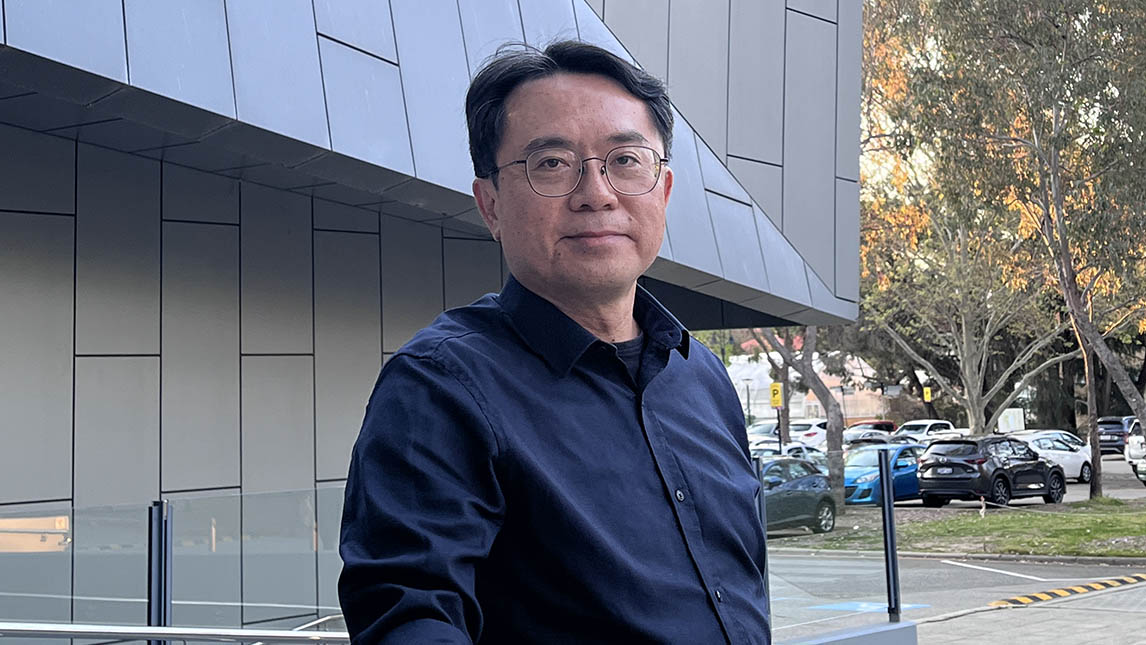
A message from the Head of the Department of Economics
Associate Professor Simon Chang
Welcome to the Department of Economics at The University of Western Australia.
Economics has been part of UWA since the University began teaching in 1913, and a distinct Department of Economics was established in 1931. Over more than a century, the Department has built a proud tradition of teaching, research and engagement with public policy.
Our alumni have gone on to make remarkable contributions in Australia and around the world. They include H.C. “Nugget” Coombs, the first Governor of the Reserve Bank of Australia; former Prime Minister Bob Hawke; former Western Australian Premier Colin Barnett; and Boediono, former Vice-President of Indonesia and Governor of Bank Indonesia. Distinguished economists such as Wilfred Salter, Reginald Appleyard and, more recently, Simon Mongey, recipient of the 2026 Frisch Medal, are also part of our intellectual heritage.
Today, our Department brings together a diverse and international community of economists working across a wide range of fields. Our academics conduct research on some of the most important economic and social challenges of our time, publish in leading international journals, contribute to public policy, and collaborate with researchers and institutions around the world.
This research strength directly enriches our teaching. We are committed to providing students with a modern economics education that combines rigorous economic thinking with data, evidence and real-world applications. Our students learn not only how economies work, but also how to analyse complex problems, evaluate policy, work with data and think critically about the choices facing individuals, businesses and governments.
Studying Economics at UWA also means studying in a Department that is deeply connected to Western Australia while looking outward to Australia, Asia and the wider world. Our location gives students a unique opportunity to engage with issues such as resources and energy, trade, labour markets, health, education, inequality, the environment and economic development.
For generations, UWA Economics graduates have built careers in government, central banking, business, consulting, finance, academia and international organisations. We are proud of that legacy, but we are equally focused on preparing the next generation of economists for a rapidly changing world.
Whether you are a prospective student, a parent, an alumnus, a researcher or a member of the wider community, I invite you to explore our programs, meet our people and discover what Economics at UWA has to offer.
Economics courses
Bachelors
- Bachelor of Commerce – Business Economics major
- Bachelor of Economics - Economics and Financial Economics majors
- Bachelor of Philosophy, Politics and Economics
Combined Bachelors
- Combined Bachelor of Economics and Bachelor of Commerce
- Bachelor of Philosophy, Politics and Economics and Bachelor of Commerce
- Bachelor of Agricultural Science and Bachelor of Commerce
- Bachelor of Engineering (Honours) and Bachelor of Commerce
- Bachelor of Environmental Science and Bachelor of Commerce
- Bachelor of Human Rights and Bachelor of Commerce
- Bachelor of Psychology and Bachelor of Commerce
Honours
- Bachelor of Economics (Honours)
- Bachelor of Philosophy (Honours)
- Bachelor of Commerce – Honours in Business Economics
- Honours in Philosophy, Politics and Economics
Combined Bachelor's and Master Degrees
Postgraduate
Coursework
- Master of Economics – Several specialisations
- Master of Commerce - Economics specialisation
- Master of Public Policy - Economics specialisation
Coursework and Dissertation
- Master of Economics – Several specialisations
- Doctor of Philosophy
Women in Economics and Finance
We had the opportunity to speak with a group of accomplished women, shaking things up in the business world and who all have a background in economics or finance. From students and academics at UWA to influential industry leaders, each of them shared their perspectives on diverse leadership and emphasised the need to continue the transformative culture shift in today's business environment.
Tayla's exciting career with an Economics degree
Meet Tayla, a UWA Bachelor of Commerce (Economics) graduate who is crunching the numbers on her path to success in the world of economics.
Research projects
- Economics
-
- Foreshadowing Mars:
Religiosity and conflict in pre-Enlightenment Europe – Dr Michael Jetter, Dr Luke Barber, and Dr Tim Krieger - Understanding Financial Literacy: Measurement, Generational Patterns, and Economic Outcomes
Implications of financial literacy for individual wellbeing and economic participation – Dr Inga Kristoffersen, Dr Paul Gerrans, Dr Elizabeth Ooi, and Dr Alison Preston - Education Under Pressure: Systems, Aspirations, and Resilience in the Face of Disruption – Dr Tushar Bharati, Dr Simon Chang, Dr Yanli Lin, and Dr Rakesh Banerjee (University of Exeter)
- Waterwise urban greening for healthy communities: Benefits, costs, and equity considerations - Dr Claire Doll
- Refugee Return [PDF, 4.1 MB] - Dr Joop Adema, Dr Cevat Giray Aksoy, Dr Yvonne Giesing and Dr Panu Poutvaara
- Foreshadowing Mars:
Our people
Our academic staff provide a strong learning and research environment for all economics students.
- Head of Department
-
- Assoc. Prof. Simon Chang - Head of Department
- Professors
-
- Alison Preston
Specialisations: Gender, Labour - Anu Rammohan
Specialisations: Economic Development, Health, Labour - Jakob Madsen
Specialisations: Economic Growth, Applied Econometrics
- Peter Robertson
Dean of UWA Business School
Specialisations: Economic Growth, International Trade
- Yanrui Wu
Specialisations: Chinese Economy, Economic Development
- Alison Preston
- Associate Professors
-
- Andrew Williams
Associate Pro Vice-Chancellor of Learning and Teaching
Specialisations: Economic Development - Christopher Parsons
Specialisations: Migration - Leandro Magnusson
Specialisations: Applied Econometrics, Econometrics - Michael Jetter
Specialisations: Economic Development, Labour, Media, Public Economics - Michael Palmer
Specialisations: Health, Social and Welfare Economics - Simon Chang
Specialisations: Education, Demography, Health, Labour
- Andrew Williams
- Senior Lecturers
-
- Girish Bahal
Specialisations: Labour, Macroeconomics, Networks - Tushar Bharati
Specialisations: Economic Development, Education, Labour - Elisa Birch
Specialisations: Education, Labour - Ishita Chatterjee
Specialisations: Applied Microeconomics - Pratiti Chatterjee
Specialisations: Macroeconomics, International Economics - Shawn Chen
Specialisations: Public Economics, Economic Development, Economic Growth - Paul Crompton
Specialisations:Resource Economics - Claire Doll - Research Fellow
Specialisations: Applied Microeconomics, Environmental Economics - Luciana Fiorini
Specialisations: Microeconomics, Game Theory - Yvonne Giesing
Specialisations: Migration, Development, Labour - Ingebjorg Kristoffersen "Inga"
Specialisations: Applied Welfare Economics - Sam Tang
Specialisations: Economic Development, Economic Growth
- Girish Bahal
- Lecturers
-
- Federico Haslop
Specialisations: Economic Development, Environmental Economics, Applied Microeconomics - Lu Wang
Specialisations: Macroeconomics, Monetary Theory, Search Theory - Mohammad Farhad
Specialisations: Trade and Development Economics - Nam Phan
Specialisations: Macroeconomic Policy, Computational Methods - Nitin Bharti
Specialisations: Applied Microeconomics, Economic History - Valeria Bodishtianu
Specialisations: Information Economics, Networks, Artificial Intelligence - Yanli Lin
Specialisations: Econometrics, Applied Econometrics
- Federico Haslop
- Emeritus, Honorary and Adjunct
-
- Abu Siddique
- Bei Li
- Hon. Colin Barnett, former Western Australia Premier
- Haiyan Liu
- Juerg Weber
- Kenneth Clements
- Mel Davies
- Michael McLure
- Nicolaas Groenewold
- Peter Hartley
- Rony Gabbay
- Rodney Tyers
- Wencke Gwozdz
Economic Seminar Series
The Economic Seminar Series is an open weekly forum, which provides exposure to a wide range of economic topics.
All staff, students, as well as interested members of the public, are welcome to attend.
View the Economic Seminar Calendar
Economics Discussion Paper Series
Throughout the teaching year, students, teachers and researchers provide comprehensive discussion papers on their innovative research findings. See the full listing of papers and read the dedicated work from our department. This research contributes to a year of success within the department.
View the Economics Discussion Paper Series
UWA Public Policy Institute
The UWA Public Policy Institute (UWAPPI) is a bridge between academic research and government, public and business needs, delivering real-world policy impact. Backed by a select team of academic experts, and with an Advisory Board of local and international leaders, UWAPPI provides solutions to local and global challenges, while also identifying and providing advice on unforeseen future policy issues.