
Made possible through a new partnership built upon the generosity of Alzheimer’s Research Australia and Lions Alzheimer's Foundation, UWA has welcomed globally recognised Alzheimer’s researcher Professor Ralph Martins AO CitWA as its inaugural Alzheimer’s Research Australia Endowed Chair.
Over the course of four decades, Professor Martins has pioneered groundbreaking Alzheimer’s research and made a profound impact in the international medical community – and now he is proud to be returning to the place where it all began. His UWA homecoming marks an exciting new chapter for the University and for the future of Alzheimer’s research in Australia and beyond.
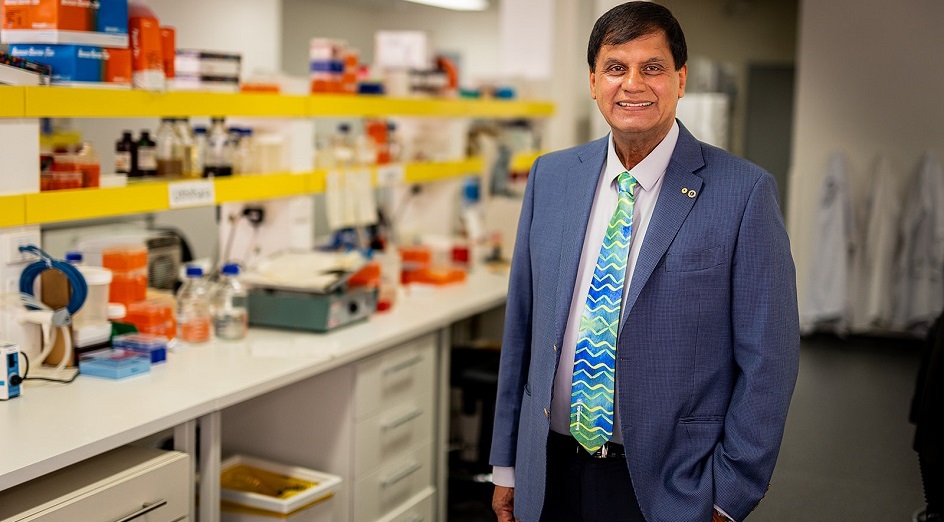 Image: Professor Ralph Martins AO CitWA.
How did you come to devote your life to Alzheimer’s research?
When I was completing my PhD at the UWA Department of Biochemistry, under the supervision of Dr Gilbert Stokes, I was offered a position with Professor Colin Masters AO to work on Alzheimer's disease. The topic appealed to me as my father-in-law, George Lewis, was just diagnosed with Alzheimer's at the young age of 60. The family was devastated, and, at that time, there was nothing known about the disease and its underlying cause, with diagnosis only confirmed when the brain was examined after death.
I decided to work with Professor Masters before taking up an appointment in Dunedin, New Zealand. My aim was to inform the family about Alzheimer's. Forty-one years later, I am still working on Alzheimer's, with my passion and commitment fuelled by three of my father-in-law’s daughters inheriting his dreadful disease, including the mother of our three children who is in a nursing home.
What is your vision for your work as the inaugural Chair?
I have pioneered the development of a blood test over the past 25 years. Despite being told that it was not possible, I nevertheless pursued this objective and, together with colleagues around the world, have demonstrated that certain blood proteins can be measured with great accuracy in reflecting the build-up of amyloid in the brain. My aim is to have a blood test in Australia within the next five years.
Can you tell us how philanthropic support enhances research innovation and discovery?
Philanthropic support is critical to the viability of my research programs. Besides allowing ideas to be tested early, donor funding has enabled the establishment of my team, along with the infrastructure and momentum for innovation breakthroughs, such as blood biomarkers for early diagnosis and prognosis of Alzheimer’s.
I am deeply grateful to The Honourable Dr Malcolm McCusker AC CVO KC and his family for over two decades of visionary support, which paved the way for many other generous donors: Alzheimer’s Research Australia, Lions Alzheimer’s Foundation, and more recently, Dr Tonya McCusker AM, who donated to seed our blood test diagnostic program. This generated pilot data, which led to a successful Industry Program Grant from the Federal Government.
What keeps you hopeful in the face of this devastating disease?
In the past decade, we finally have disease-modifying treatments that are now available in Australia. This outcome was made possible by the pioneering work of Professor Colin Masters identifying beta amyloid at UWA in 1986 and the subsequent decades of work undertaken globally. This outcome and the fact that we are so close to developing a blood test that will be accessible to everyday Australians – to enable them to access effective treatment early before brain damage occurs and for high-risk individuals to be identified for prevention – gives me great hope for the future.
Read the full issue of the Winter 2026 edition of Uniview [Accessible PDF].