
By Annelies Gartner
The human skeleton is an amazing example of biological engineering but if one part is compromised it can impact the rest of the body’s health and wellbeing.
Many factors are thought to affect bone health including diet, the gut microbiome, hormones, smoking, medications, physical activity, body composition, genetics and even sleep
So how can we maintain good bone health and what research is being undertaken at The University of Western Australia to prevent, diagnose and treat bone disease?
Chief investigators Professor Scott Wilson, from UWA’s School of Biomedical Sciences, and Associate Professor Kathy Zhu, from UWA’s Medical School, along with molecular geneticists Shelby Mullin and Purdey Campbell are working to identify how inherited genetic differences influence osteoporosis risk.
“Bone mass accumulates during growth and at about the age of 20 to 30 years of age we achieve peak bone mass,” Associate Professor Zhu says.
“Typically, men achieve a higher peak bone mass than women and bone mass begins to decrease after age 50, particularly around menopause in women.”
The researchers are working to identify regulatory DNA variants that influence osteoclasts (cells that break down bone tissue) and osteoblasts (bone-forming cells), which together continuously renew the skeleton throughout life.
“It is estimated that around 60 to 80 per cent of variation in bone mineral density is influenced by genetics,” Professor Wilson says.
“Genetic influences on osteoporosis risk begin early in life and can affect many aspects of bone biology, including osteoblast activity, which impacts skeletal growth and architecture.”
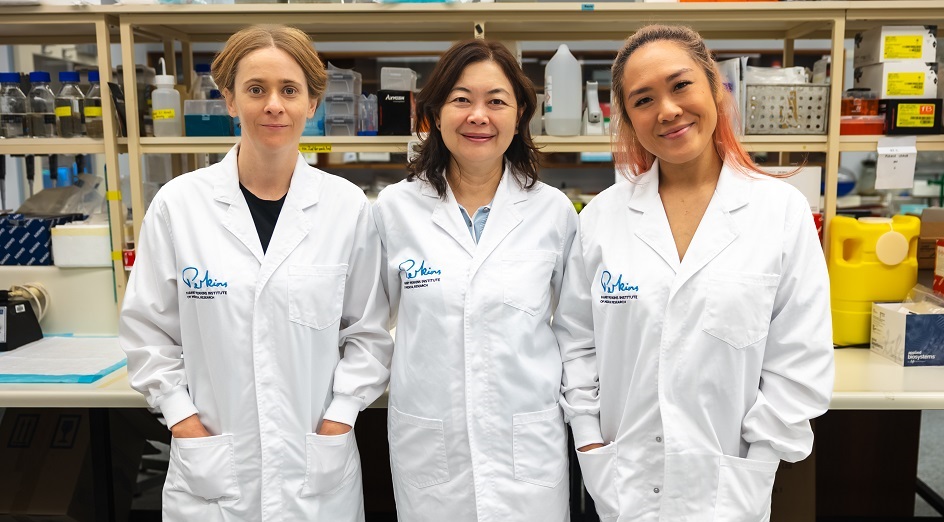 Image: Molecular geneticists Purdey Campbell, Shelby Mullin and Associate Professor Kathy Zhu.
Large genetic studies have now identified many regions across the genome that are associated with osteoporosis risk.
“Through our research, and that of others, we have identified hundreds of regions in the genome that contribute to genetic risk for osteoporosis,” Professor Wilson says.
“If your genetic make-up includes certain risk variants, you may develop a lower peak bone mass, which can increase the likelihood of fractures later in life.”
Old and damaged bone, including micro-fractured bone, is removed by osteoclasts, and osteoblasts repair this by forming new bone.
“There seems to be an imbalance in some people, with excess resorption by osteoclasts, which can disrupt the repair cycle carried out by osteoblasts,” Professor Wilson explains.
“Genetics also affects calcium handling and hormone pathways, including the oestrogen receptor.
“Vitamin D metabolism plays a key role in calcium homeostasis and is also influenced by genetic variation.”
A single gene variant can cause rare monogenic bone disorders. For example, DNA changes in the gene COL1A1 can cause osteogenesis imperfecta, leading to profound bone fragility.
Using advanced molecular genetics approaches, the researchers are pinpointing the specific DNA changes that alter gene regulation in bone cells.
Once this has been completed, the information can be used to help identify new therapeutic targets with an aim to develop therapies for osteoporosis that target osteoblasts and/or osteoclasts directly.
“Many genetic risk factors for osteoporosis have been discovered, but we still don’t know how most of them actually affect bone cell function,” Professor Wilson says.
“Our work aims to identify which genes are switched on or off by these risk variants, and how this alters the way bone cells function.”
Dr Kai Chen, from UWA’s School of Biomedical Sciences, is working to transform how bone diseases are understood and treated, with a focus on conditions such as osteoporosis, osteoarthritis and cancer that spreads to bone.
“Osteoporosis is the most common bone disorder in Australia and is estimated to cause one fracture nearly every three minutes a day,” Dr Chen says.
“The current estimate is that osteoporotic fracture costs more than $5 billion a year in Australia, with more than 20,000 osteoporotic hip fractures annually.”
Dr Chen is also interested in cancer bone metastasis, when, for example, breast cancer or prostate cancer spreads to the bone and disrupts its normal structure and function.
“When people develop conditions such as osteoporosis, osteoarthritis or a bone cancer, the skeletal cells begin to behave very differently,” Dr Chen says.
“Osteoporosis is the most common bone disorder in Australia and is estimated to cause one fracture nearly every three minutes a day.” Dr Kai Chen
Osteoporosis is the most common bone disorder in Australia and is estimated to cause one fracture nearly every three minutes a day.
Dr Kai Chen
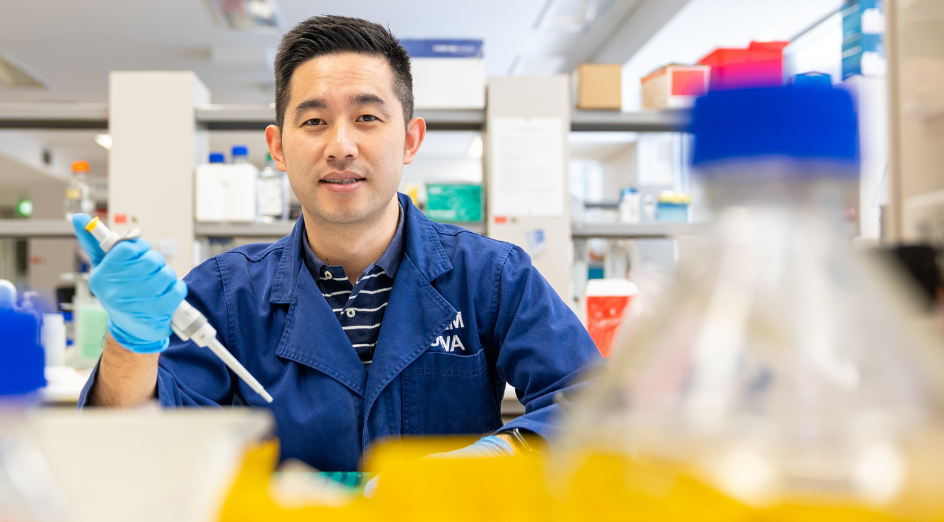
To better understand these changes, Dr Chen and his team have built an advanced imaging platform that can map metabolism within tissues at an unprecedented level of detail.
Using cutting-edge ion microscopy, the platform tracks how nutrients move through cells and tissues, helping researchers uncover what drives disease at the microscopic level.
“Using this innovative imaging technique, we hope to discover what kind of proteins, genes or enzymes are responsible for the changes in the skeletal cells,” he says.
“This knowledge can then be used to design entirely new ways to diagnose and treat disease.”
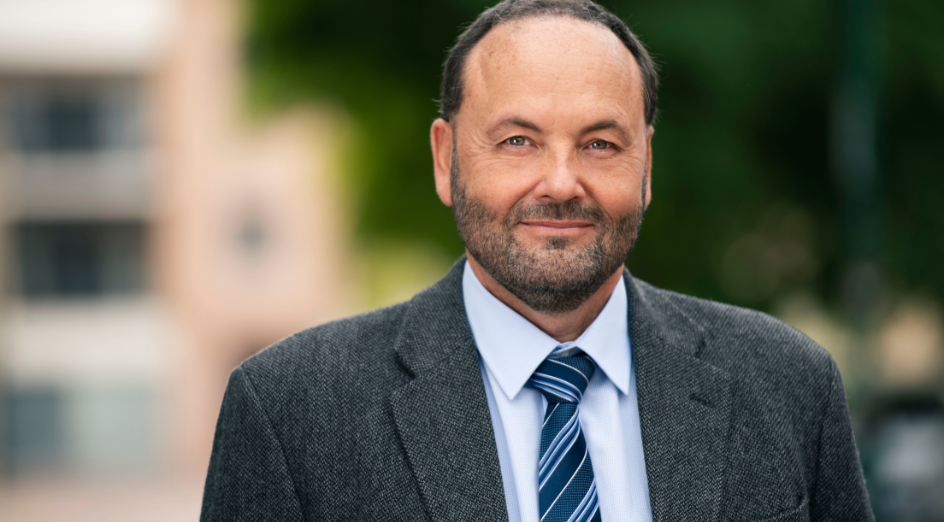
Vitamin D metabolism plays a key role in calcium homeostasis and is also influenced by genetic variation.
Professor Scott Wilson
A major focus of Dr Chen’s research is the development of nucleic acid therapeutics — medicines based on RNA.
“RNA is a molecule that carries genetic information and plays a crucial role in building proteins within our cells,” Dr Chen says.
“We aim to develop small RNA-based therapeutics that can bind to disease-related RNA in cells and switch off the genes that drive skeletal disease.”
The team has already discovered a novel marker highly associated with osteoporosis and is developing an RNA drug to test its effect in preclinical model.
The researchers also aim to develop novel markers which can diagnose osteoporosis and bone cancer at a very early stage – before it is detectable by a traditional scan.
But until these diagnostic tools and therapies are available what can be done to protect our bone health?
Nutritionist and dietitian Dr Amelia Harray, from UWA’s Medical School, says bone health is incredibly important at all stages of life.
“It is important pregnant females get enough calcium and also children as their bones grow really rapidly, so they consistently need to be eating calcium-rich foods,” Dr Harray says.
“Bone density peaks at about age 25 so getting lots of calcium into your children as they are growing into young adults is vital.
“When females hit menopause their calcium needs increase by about 30 per cent due to a decline in oestrogen. This hormonal change leads to increased bone breakdown and reduced calcium absorption in the gut.
“This continues to happen into older age when you’re most likely to have a fall and break a bone or get diagnosed with osteopenia or osteoporosis. So, it’s important to get more calcium from your diet to help maintain bone strength.”
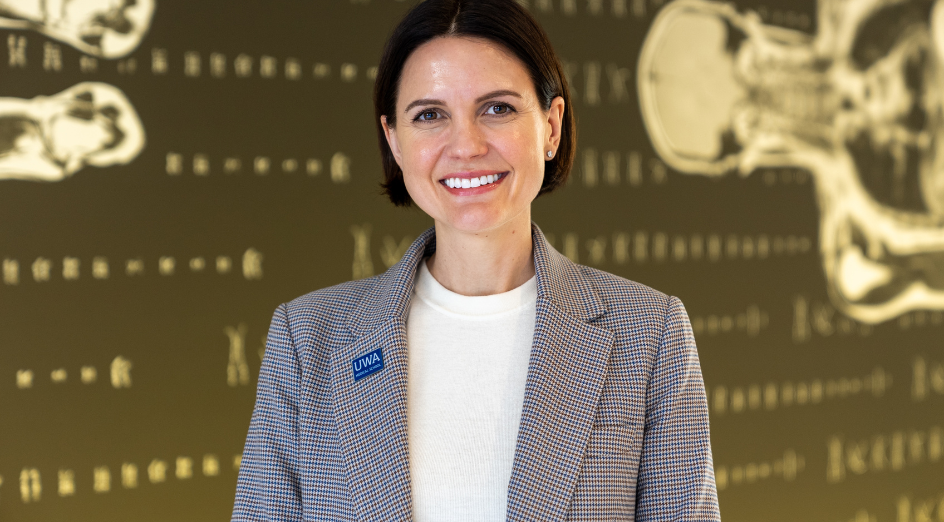
Bone density peaks at about age 25 so getting lots of calcium into your children as they are growing into young adults is vital.
Dr Amelia Harray
Calcium also plays an important role in our nervous system and muscle contraction, and the body needs vitamin D to help calcium be easily deposited into bones.
“To keep up blood calcium levels the body will draw stores out of bones so when people get blood tests they think their levels are fine,” Dr Harray explains.
“But over decades their bone density is slowly decreasing as the stores are being drawn on and not replenished.”
A calcium-rich diet throughout life, from animal or plant foods, along with adequate vitamin D is essential for good bone health as well as weight-bearing exercises to strengthen bones.
“Try to make sure that any dairy alternatives are fortified with at least 120 milligrams of calcium per 100 millilitres,” Dr Harray says.
“People drink oat and almond milks thinking that they’re healthier. Even if they say unsweetened or organic, they may not be filling the gap of a dairy alternative in terms of nutrients.”
It’s also important to keep an eye on your bone health, especially for women once they reach around 50 years of age.
“A bone densitometry scan, a very low dose x-ray, can give early warning of osteoporosis risk,” Associate Professor Zhu says.
“If an older person falls and fractures their hip it can be a life-changing event and often leads to loss of independence, institutionalisation and an increased risk of death.
“A proactive approach, including a healthy diet, regular weight-bearing exercise, and timely bone density assessment, can help maintain bone health and reduce risk.”
Read the full issue of the Winter 2026 edition of Uniview [Accessible PDF].