
By Tamara Hunter
In 2019-2020 there were 6,400 centenarians in Australia: by 2061 there are projected to be 40,900. As our population continues to age, it’s becoming more and more important to understand what it means to ‘age well’. A 30-year study of Western Australian men – and one of its most enduring participants – has a tip or two to share.
Every Monday morning, 95-year-old Max Machlin swings his legs out of bed, takes a moment to steady himself, then propels himself into a day of quiet giving.
By 9am he is in a ground floor office at Royal Perth Hospital, carefully loading out-of-date magazines and donated books onto the trolley he will spend the next few hours wheeling through wards populated, mainly, by cardiac and trauma patients.
As he approaches each patient, he assesses them to gauge their openness to a chat.
“You can feel if a patient wants to communicate with you or not,” Max says. “I’ll offer them a book or a magazine but if they’re not interested or don’t want to be bothered, I’ll thank them, wish them well and move on.”
For others, the sight of a friendly face and accompanying chat offers a cheering distraction – exactly the effect he is hoping for.
You’ve got to have a reason to get up and out, otherwise it’s too easy to just vegetate at home.
Max Machlin

“On the trauma wards it’s usually injuries from falls or some form of vehicle accident so I’ll ask them ‘What are you in for – motorbike, tree, ladder, e-scooter?’” Max says.
“It gives them something to laugh about and then we might spend five or 10 minutes having a conversation, discussing their problems.
“It makes things that little bit lighter, and the magazines can break the monotony of just laying in bed or watching television.”
By the end of his shift as a Friends of Royal Perth Hospital volunteer Max and his trusty trolley – an essential aid to support a troublesome knee – will have put in close to 8,000 steps.
“It’s good because it makes me walk,” he says. “They’re really long wards so I feel I’m doing something, but it gives me a lot of personal satisfaction, too. I’m helping someone who could use a bit of cheer.”
It’s that powerful sense of achievement, and the contribution it makes to his wellbeing, that continues to motivate Max after 38 years as an RPH volunteer – the first 33 driving patients to and from appointments and the past five as a patient service volunteer.
“It gives you something you have to get out of bed for,” Max says. “You can’t just retire and do nothing. Within a very short time you’re asking yourself ‘what have I got to get up for?’
“You’ve got to have a reason to get up and out, otherwise it’s too easy to just vegetate at home.
“I can’t do that: this is not a rehearsal. I still want to live – I still enjoy so many things.”
It’s a mindset which, long-running UWA research shows, is key to ageing well.
On top of nearly four decades of volunteering, Max is one of thousands of Western Australian men who have taken part in the Health in Men Study (HIMS), led by UWA Professor of Geriatric Medicine and Director of the Western Australian Centre for Health and Ageing, Leon Flicker.
HIMS – the largest longitudinal study of men in Australia – has spent the past 30 years investigating the factors that help men remain healthy and live well as they grow older.
“The thing our HIMS participants always talk about as being really important to them is meaningful activity: having a reason to get out of bed every day. ‘What are my jobs? What do I have to do’,” Professor Flicker says.
People always tell you about doing 150 minutes of physical activity and so on - but it’s actually the step from being sedentary to doing something every day that makes the biggest difference.
Professor Leon Flicker
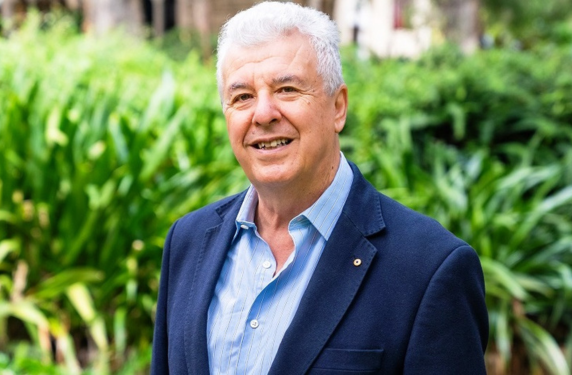
Starting in 1996 as a population-based trial to investigate the benefits of abdominal aortic aneurysm screening, HIMS soon evolved to cover a broad range of topics related to ageing.
More than 20,000 men aged 65 years or over were invited to participate, with more than 12,000 taking part in the first wave of data collection in the form of questionnaires and an ultrasound test. Some who participated in later waves also had physical assessments and blood tests.
With each wave, conducted on average every one-to-two years, numbers have steadily dropped off as the cohort has aged, moved into care, become too unwell to participate, withdrawn, or died.
As the study enters its 12th wave a hardy core of around 100 participants, including Max, remains. Those still involved are now aged between 94 and 103 years and continue to live independently – a core criterion for participation. The group includes six centenarians.
Aided by linked data including mental health, medical, mortality, hospital and emergency department records that have enabled the team to follow the men’s progress, HIMS has yielded nearly 300 research papers reporting on topics including cardiovascular disease, cancer, dementia, mental health, frailty, health system costs associated with ageing, and the factors that shape successful ageing.
Key findings from both HIMS and the WA Centre for Health and Ageing’s broader work have included that many aspects of ageing are modifiable well into older age.
The bottom line, Professor Flicker says, is you’re never too old to improve your health.
“Staying physically active is so important,” he says. “Even 10 minutes of walking a day makes a major difference.
“It’s never too late to start. People always tell you about doing 150 minutes of physical activity and so on – but it’s actually the step from being sedentary to doing something every day that makes the biggest difference, then you keep getting benefits along the way.”
Other key factors for ageing well include managing balance and strength to reduce the risk of falls, staying on top of general health checks (such as blood pressure and diabetes), maintaining hearing and eyesight where possible – both linked to social withdrawal when lost – and maintaining meaningful social connections.
“You don’t necessarily need a lot of friends and family, but you need enough – whatever that is for the individual,” Professor Flicker says.
Study coordinator Jill George has been conducting the data collection, much of it in person during home visits, for the past 16 years.
Mrs George confirms ongoing physical activity and strong social networks are common features among the ‘healthy agers’ still involved in the study. Other common themes include family involvement; community engagement; stoic attitudes towards health setbacks; adapting to limitations; mixing with a range of ages; and a sense of humour.
“One question asked in the questionnaire is ‘Would you like to live to 100 and if so, why?’. Most reply ‘Yes, as long as I am well’,” she says.
“Some add things like ‘So I can see my great-grandchildren finish university, or my grandchildren marry’, so they still have a lovely investment in their life.
“They are really proud of their involvement in research that will benefit future generations, so that may provide them purpose, and they feel they add value in society.”
For Max – who in 2021 was awarded a Medal of the Order of Australia for his longstanding services to the community – the desire to contribute and keep moving shows no sign of waning.
“Some days it can be a bit grim having to get up early and beat the traffic to get down and see what magazines I have to fill my trolley with, but I know I have to do it and I’m glad I’m doing it,” he says.
“I’ll keep going as long as I am able, and if it becomes too much to do this, I’ll have a look for something else.”
Read the full issue of the Winter 2026 edition of Uniview [Accessible PDF].