
By Annelies Gartner
During this year’s Australian Open, scorching January temperatures in Melbourne triggered extreme heat protocols and outdoor play was suspended.
The Grand Slam tournament uses a heat stress scale based on radiant heat, humidity, air temperature and wind speed, with matches on outside courts stopped when it reaches level five.
According to Professor Olivier Girard from The University of Western Australia’s School of Human Sciences, players would have been training in a heat chamber for at least one hour a day for seven days before the Open.
“Once they’d arrived they would have spent time outside in the heat of the day to better cope with the stress of exercise – heat acclimation is the number one way to protect us against the heat,” Professor Girard says.
“Within about a week they can lower their heart rate by about 15 beats per minute, start to sweat earlier and delay the rise in core temperature.”
Professor Girard’s research has found exercising in the heat not only causes an increased cardiovascular load and core temperature but can also quickly affect cognitive function.
“When core temperature increases by just one degree, to around 38.5C, people become hyperthermic, which can impair decision-making,” Professor Girard explains.
Previously, it was assumed that alteration in cognitive function occurred only once core temperature had risen significantly.
Using UWA’s heat chamber at the Sport Science, Exercise and Health laboratory, Professor Girard was able to show heat stressors could impact cognitive ability even before the body became hyperthermic.
“If someone moves from a normal environment into a heat chamber, their cognitive function begins to deteriorate almost immediately,” he says.
“It is more difficult to solve problems, organise information logically and make decisions – it can be immediate.”
The findings are not only applicable to elite athletes but also to workers exposed to heat stress, such as FIFO and firefighters, where occupational heat stress can impact health and productivity.
“Environmental conditions, physical activity and heat retained by clothing or personal protective equipment can all affect the ability to work safely and efficiently,” Professor Girard says.
Environmental conditions, physical activity and heat retained by clothing or personal protective equipment can all affect the ability to work safely and efficiently.
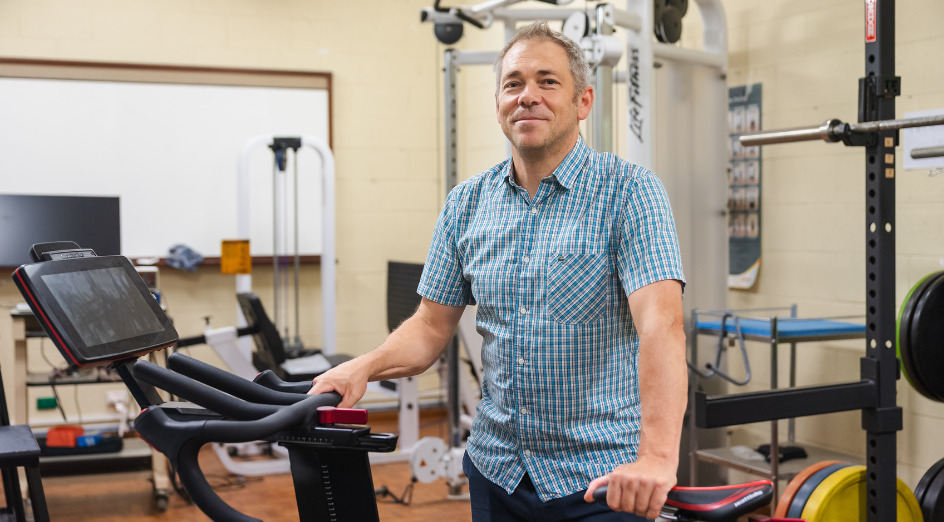
Professor Olivier Girard
UWA studies have found dehydration and poor sleep are among the main causes of occupational heat stress for FIFO workers in northern Western Australia.
“They’re there for two weeks, and if sleep quality is poor and they are dehydrated chronically, this adds to the fatigue that occurs through their shifts,” Professor Girard says.
“We need to improve education about hydration. Many outdoor workers drink a lot of coffee that contributes to dehydration, and people should not wait to be thirsty before you start drinking because by then it’s probably already too late.”
Professor Girard also works with firefighters from the Department of Fire and Emergency Services, whose protective equipment can prevent sweating.
“This can lead to a build-up of core temperature and, if appropriate work-to-rest ratios aren’t implemented, it can put the body at risk and cognitive function is altered – this increases the chance of injury,” he explains.
“They’re working in challenging environments and chronic dehydration is also a factor but everyone is very different depending on genetics, heat acclimation and previous exposure.”
So how can guidelines be developed when there are so many influencing factors?
“We’ve being doing research where we ask individuals to swallow a small ingestible pill that tracks gastrointestinal temperature to help us understand thermal strain,” Professor Girard says.
Currently this technology remains relatively expensive for industry to implement in the field on a regular basis.
“In the future it will become more affordable, and outdoor workers could be given ingestible core temperature pills that transmit warnings to wearable devices such as a watch,” he explains.
“It could let us know when it’s time for them to take a rest and when their core temperature has dropped. There’s still a lot of important work to be done in this space.”
Read the full issue of the Winter 2026 edition of Uniview [Accessible PDF].