
With the 2026 AFL season in full swing, UWA Medical School graduate and West Coast Eagles Head of Health, Dr Casey Whife (MBBS ’12), is carving a unique path at the intersection of sport and science.
Throughout his journey from aspiring athlete to leading Australian Football League (AFL) club doctor, Dr Whife has developed a keen understanding of the physical toll of high performance sport and how to keep athletes thriving across the long and demanding modern AFL season.
“Sport and exercise medicine was on my radar before day one of med school,” Dr Whife says. “I dreamt of being a professional athlete, but it turns out I could have a bigger impact by helping to keep others on the park.”
After graduating in 2012, Dr Whife completed his rotations through various hospital posts, devoted his third year of residency to emergency medicine for its trauma exposure, and completed a Master of Philosophy on burn-related neuroplasticity with Professor Fiona Wood – research he now extends to anterior cruciate ligament (ACL) injuries and brain stimulation therapies.
He also completed an International Olympic Committee (IOC) Diploma in Sports Medicine, before gaining admission to the Australasian College of Sport and Exercise Physicians (ACSEP) training program. This culminated in a Fellowship in 2021, where he was recognised as the College Medallist.
Early stints as a team doctor for WA Football League (WAFL) club Peel Thunder and the Fremantle Dockers’ AFLW team paved the way for his move to the West Coast Eagles, during a pivotal period for the club.
Broken noses and bones, and even the odd haemopneumothorax, keep things lively but colleagues at other clubs can top me; a ruptured testicle might take the cake!
Dr Casey Whife
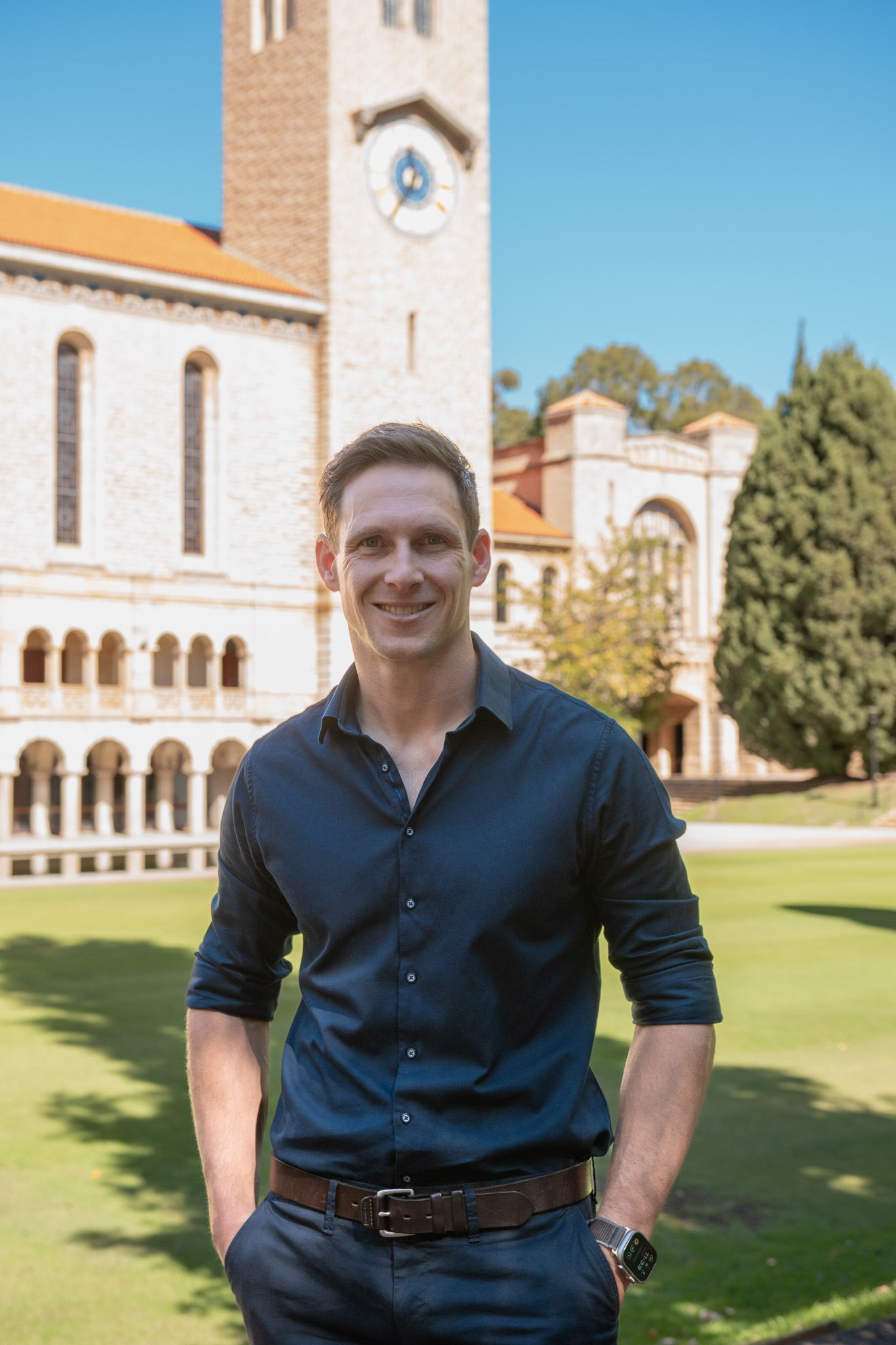
Now firmly established as Head of Health, Dr Whife leads the Eagles’ medical and wellbeing strategy, blending elite sport, clinical precision and medical innovation.
“Rapid, accurate musculoskeletal examination remains a core skill,” he says, when asked which clinical skills he relies on most. “On game day, you have your eyes, hands, and experience to decide if a player can return to the game.”
Dr Whife explains that match day is only a fraction of the role overall. The real grind happens during the week, with diagnostic sprints that include injury reviews, rehabilitation planning and selection meetings with coaches and high performance staff. These are followed by triaging knocks at training, running injury clinics and managing the constant flow of documentation required in professional sport. Still, match day provides many memorable moments.
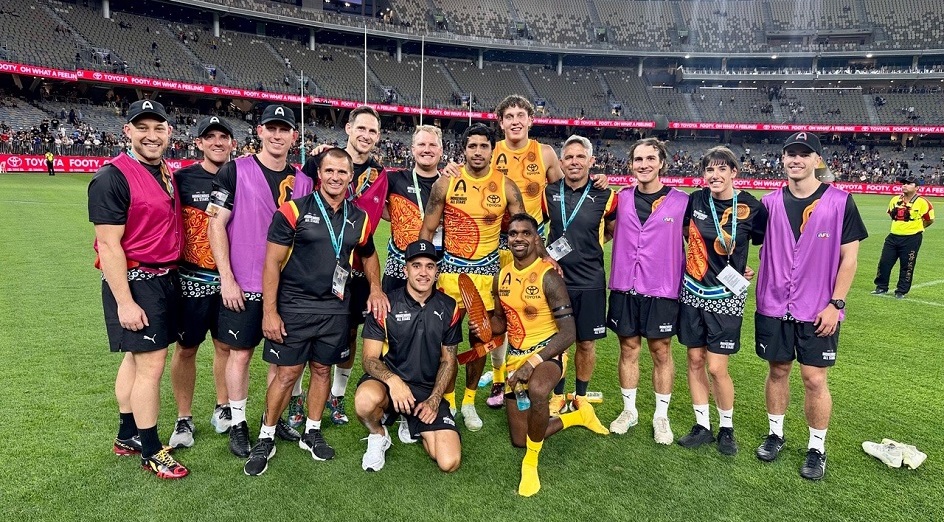 Image: Dr Casey Whife (second row, fourth from left) joins players and medical staff on the field following an AFL match.
I once pulled a player minutes before the bounce for what turned out to be his first flare of ulcerative colitis – hardly your textbook footy injury,” he says. “Broken noses and bones, and even the odd haemopneumothorax, keep things lively but colleagues at other clubs can top me; a ruptured testicle might take the cake!”
Breaking into sports medicine can feel daunting for many medical graduates, largely because most students never see it on rotation. The field often appears insular, a ‘closed world’, but there are accessible entry points for those who are curious and motivated.
Dr Whife suggests knocking on the doors of your local sport and exercise physician. He recommends asking to shadow them at training, or in the clinic, to get ‘a front-row seat’ or volunteering at sporting events such as the Busselton Ironman.
“A seasoned crew will guide you, and you’ll learn more in one weekend than a month on the wards,” he says. “Show up, be useful, and the invitations keep coming.”
Dr Casey Whife’s journey to sports medicine reflects a rare fusion of passion, precision and perseverance – proving that with curiosity and commitment, even the most specialised corners of medicine are within reach.
Read the full issue of the Winter 2026 edition of Uniview [Accessible PDF].