
By Tamara Hunter
A century’s worth of advances in healthcare, education and living standards mean more Australians can expect to survive into older age than ever before.
By 2060 Australia will have more centenarians than at any time in its history, with a child born that year expected to live to 87 if a boy and 89 if a girl.
As our society shifts to having twice as many people aged over 65 than under five, governments are being forced to rethink how public policy can continue to meet the needs of all.
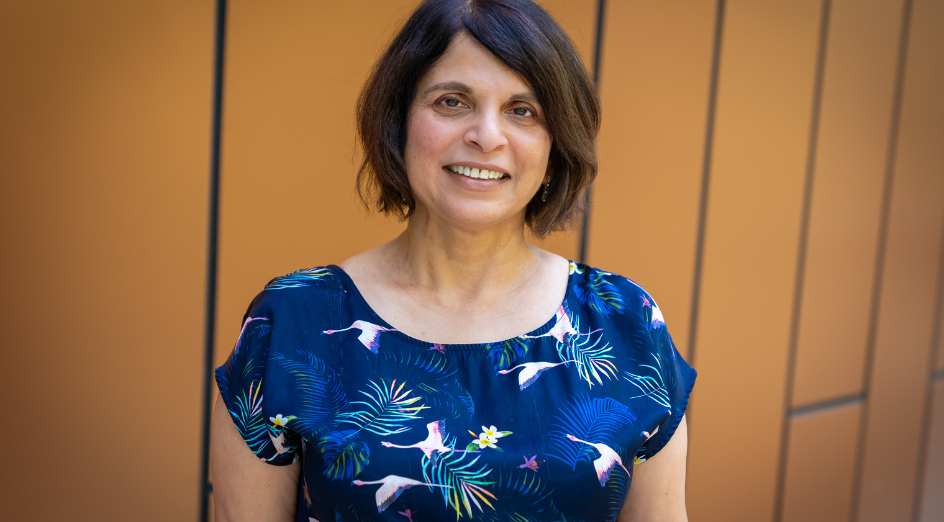
Economics Professor Anu Rammohan from the UWA Business School says longevity brings a complex mix of opportunities and pressures, particularly when quality of life is taken into account.
“Everybody in theory thinks, yes, I want to live a long life – but what does that look like?” Professor Rammohan says.
“If it’s not a long and healthy life, it has personal impacts as well as much broader ones.
“On the plus side, given we’ve had compulsory superannuation since 1992 the hope is people have built enough of a balance that they are not going to be a burden on the public purse.
“That has been a very good policy overall but not everyone benefits equally. For example, women tend to maintain lower superannuation balances than men.
“At some point if your super balance is too small you’ll probably come back onto the pension, so that places a greater burden on the shrinking pool of younger people of working age.
“This potentially leads to intergenerational tension. Similarly, if older people become a bigger proportion of the electorate and voting share there’s a risk families may feel more alienated by government policy.”
Everybody in theory thinks, yes, I want to live a long life – but what does that look like?
Professor Anu Rammohan
Other issues include whether superannuation, migration and tax policy need to be rejigged to compensate for the diminishing income tax base, whether the retirement age (currently 67) should be raised, and how to support equitable workforce participation for both older and younger people – particularly with AI reshaping employment.
“If you’re living longer, potentially being unhealthy, that can impact on your labour market participation,” Professor Rammohan says.
“It can also lead to increasing dependence on health, aged care and welfare systems so it will be crucial for us to fund those services that help people live well into old age – the challenge for government will be how we maintain that funding.”
Professor of Geriatric Medicine at UWA and Director of the WA Centre for Health and Ageing, Leon Flicker, agrees supporting healthier ageing is critical but argues our ageing population has been wrongly framed as a crisis.
“The fact we are living longer is a good news story. If you look back at life expectancy a century ago, we’ve gained more than 30 years,” Professor Flicker says.
“This is a manifestation of a successful society – people don’t die prematurely as much now.”
He says Australia’s population has been ageing gradually for decades.
“It’s not a sudden crisis – we’ve had a long time to prepare for this and while it does require changes to improve systems and address issues like disparity, inefficiency and excessive bureaucracy, it really only requires tweaks.”
Those tweaks include adapting the health system to care for more frail older patients alongside younger people, and rethinking how to provide meaningful work for all generations.
Professor Flicker challenges the idea that older people are driving rising healthcare costs, noting only 20 per cent is due to ageing itself, and 80 per cent to technological change.
“Healthcare costs rise because we have better treatments and more expensive drugs now – not because people are older,” he says.
He rejects assumptions that older Australians are a burden, saying many remain a functioning and productive part of society.
“People like to blame older people for our economic problems but it’s just wrong – we have to look at our tax system and the way we generate wealth in the country, at disparities between rich and poor,” Professor Flicker says.
“One of the problems we have is rampant ageism, both institutional and personal. None of the ‘isms’ make sense but ageism makes even less sense than the rest of them, because it’s us.
“What do we want our own older years to look like? That’s the question we should be asking.”
Read the full issue of the Winter 2026 edition of Uniview [Accessible PDF].