
For people living with severe mental illness, hope often arrives quietly through careful listening, sustained research and the belief that lives can, and should, be better.
At the Neuropsychiatric Epidemiology Research Unit (NERU), that hope is being turned into evidence, insight and change, thanks to the generosity of a committed philanthropist.
Established in 2008 by Emerita Professor Vera Morgan, NERU has become a recognised leader in psychiatric epidemiology, with a particular focus on psychotic disorders such as schizophrenia and bipolar disorder with psychotic features.
The unit’s work asks deeply human questions: Why do people with severe mental illness experience such poor physical health outcomes? What shapes recovery over a lifetime? And how can services respond in ways that truly improve both mental and physical wellbeing?
Now led by Head of Unit, Research Associate Professor Anna Waterreus, NERU brings together epidemiological, clinical, sociological and lived-experience perspectives. Researchers sit alongside clinicians, and people with first-hand experience of mental illness are valued partners in shaping research priorities and interpretation.
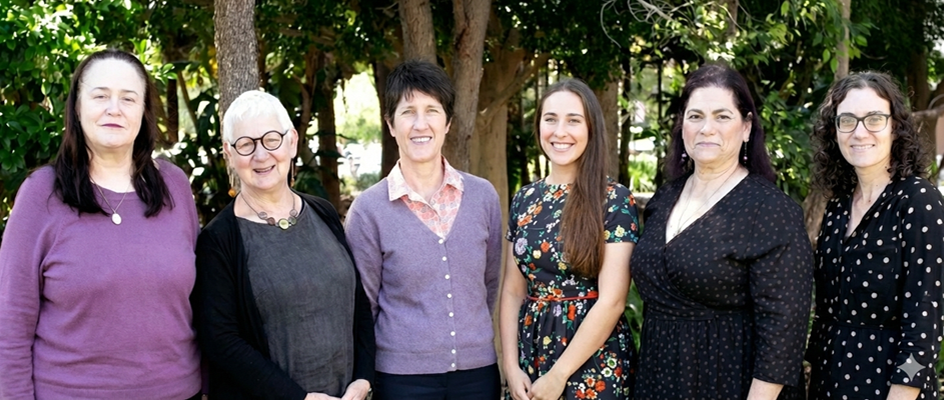 Image: The NERU team: (L-R) Susie Hincks, Emerita Professor Vera Morgan, Dr Anna Waterreus, Yey Berman, Dr Giulietta Valuri, and Tammy Hall
“Our overarching aim is simple: to generate evidence that can be translated into better care, better policies and better lives,” Associate Professor Waterreus said.
Yet research in severe mental illness remains chronically underfunded. National investment in mental health research has declined over the past two decades, despite the fact that in 2010 alone, nearly 64,000 Australians were living with a psychotic disorder and in contact with public mental health services.
Thanks to steadfast donor support since 2019, NERU researchers published 27 articles and reports and delivered 20 national and international presentations between 2021 and 2023 – sharing Australian data and insights with the world. Without long-term, sustained philanthropic funding, much of this work simply would not exist.
Philanthropic funding has also made possible one of the unit’s most ambitious projects: a 15-year longitudinal study tracking health outcomes and predictors of recovery for Western Australians with psychotic disorders. This unique dataset is already informing more humane, effective models of care.
For Susie Hincks, a research partner with lived experience of severe mental illness, the impact is deeply personal.
“Science is hope. NERU values lived experience not as an add-on, but as essential knowledge,” Susie said. “Working together, we’re striving for a future where people with severe mental illness are no longer placed in the ‘too hard’ basket.”
Susie is quick to acknowledge the uniqueness of NERU’s approach, especially how much value is placed on her first-hand knowledge being an integral part of the research. She has found the team abounds with equality and respect.
“Working with NERU has given me a sense of achievement,” she said. “We strive together to further the research that will offer people with severe mental illness a better and more humane way of living – a life without the devastating mental anguish and stigma. This gives me great hope for the future.”
Philanthropic support is now paving the way for future work, including the revision of a globally respected diagnostic interview tool developed at UWA and used by clinicians and researchers worldwide. It is a quiet reminder that behind every dataset are people – and behind every breakthrough, the quiet generosity of those who believe lasting change is possible.
Through this partnership between research, lived experience and philanthropy, NERU is helping to ensure that hope is not fleeting, but enduring.