
More than 200,000 trees will be planted along a 10km stretch of land south of Mandurah as part of an ambitious plan to save Western Australia’s iconic Carnaby’s Cockatoo from extinction.
Launched today, the Corridors for Carnaby’s (C4C) project is led by world-renowned botanist and conservationist Professor Kingsley Dixon AO from The University of Western Australia and backed by Amazon Australia’s Right Now Climate Fund in collaboration with the Winjan Aboriginal Corporation and Five Rivers NRM.
The project aims to create connected corridors of habitat and vegetation on both public and private land to provide food, water and nesting hollows for the black cockatoos.
The Carnaby’s population is in freefall, with more than half its numbers lost over the past 45 years due to clearing of its habitat and primary woodland food sources for farming and urban development.
Amazon has invested $3.3 million in the three-year C4C project, which will restore 1,000 hectares of habitat in a bid to ‘extinction proof’ the endangered species.
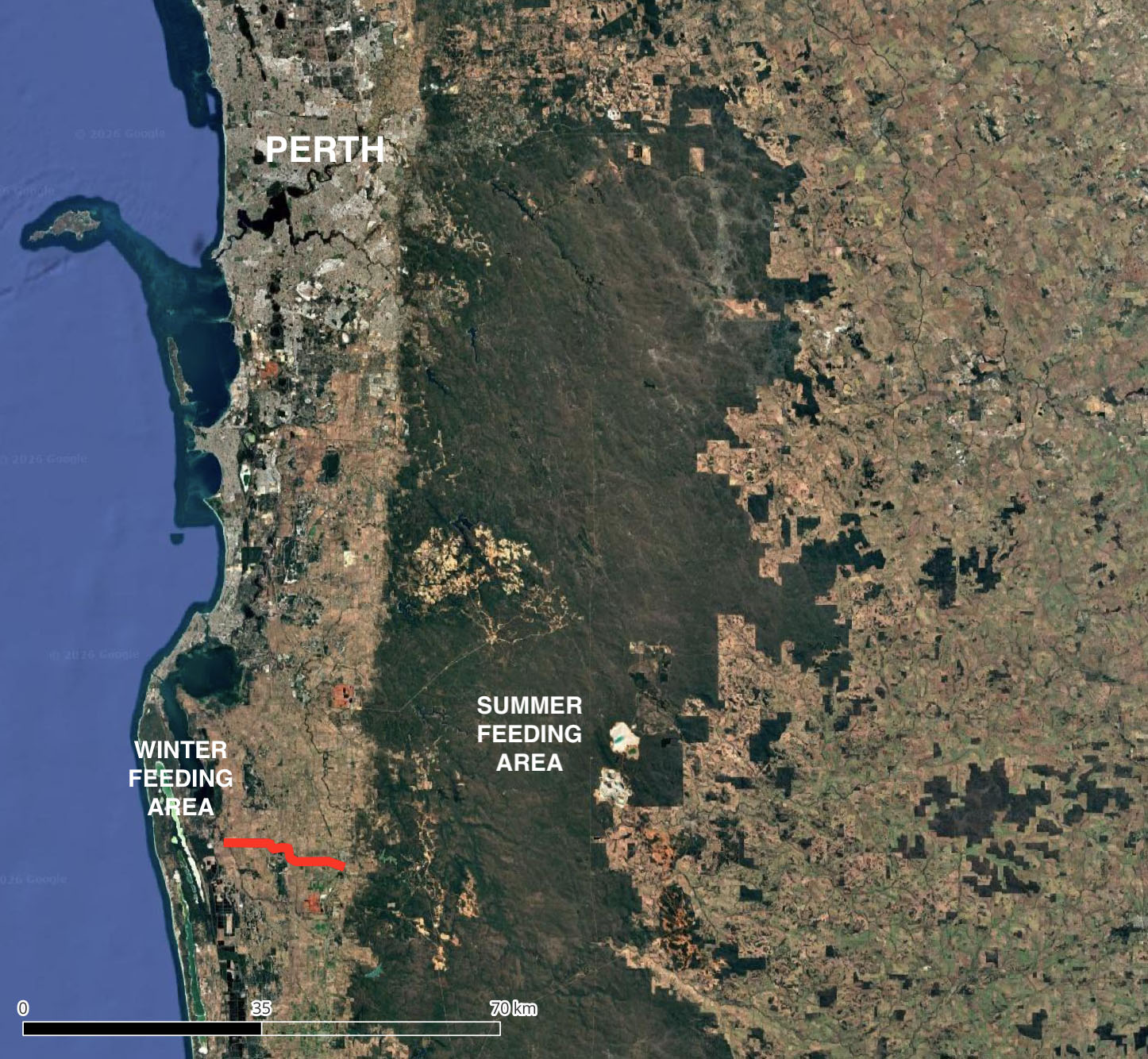
Planting of Banksia seedlings has already begun, with the trees’ nutritious seeds to provide a lifeline for Carnaby’s across the 10km corridor.
Fifty artificial nests and 20 self-cleaning and solar-powered water stations will also be installed across the corridor, while homeowners will be invited to make their gardens oases of food for Carnaby’s.
Around 2,000 fast-growing nut trees will be distributed to Perth residents to be planted in urban areas to sustain the cockatoos while native species mature in the restoration corridors.
“We estimate that if just one per cent of home gardeners along the corridor plant a tree in support of the project, the tide could be turned on famine for the Carnaby’s,” Professor Dixon said.
The project will also work with 12 Perth schools over three years to plant more than 2,000 Banksia and other trees to develop ‘pocket forests’ that will provide further food and nesting hollows while developing and fostering children’s interest in science, nature and conservation.
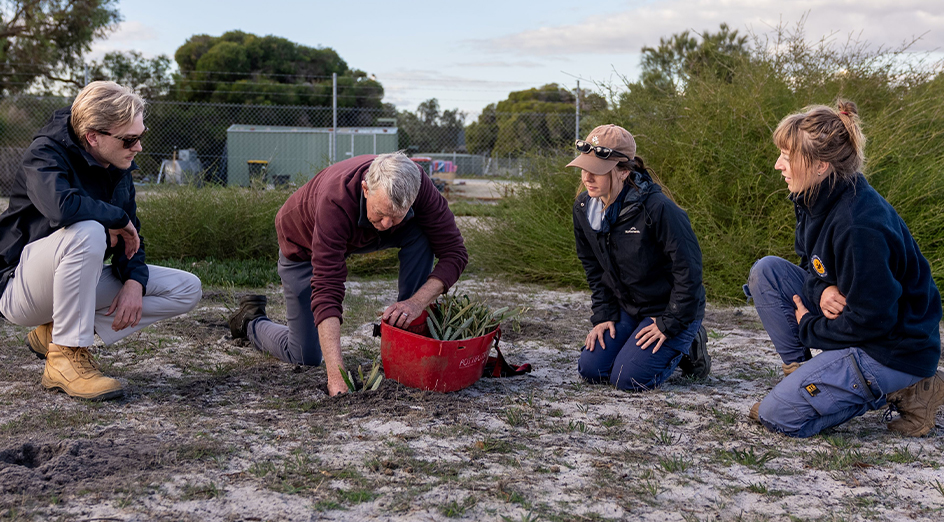 Image: Planting Banksia seedlings to provide food for Carnaby’s Cockatoo.
The Amazon funding will enable UWA’s School of Biology to train Indigenous seed collectors and restoration practitioners through the Winjan Aboriginal Corporation’s Aboriginal Rangers Program.
The 18-month course, which combines traditional ecological knowledge with contemporary restoration science, will result in ‘micro-credentials’ that create certified pathways to degrees and careers in agriculture, horticulture and environmental restoration.
Amazon Web Services is supporting the project by working with UWA to develop AI-enabled flock identification technology for Carnaby’s Cockatoos, with an app also being developed to enable Western Australians to participate in flock identification and population censuses from their own backyards.
Professor Dixon said Carnaby’s Cockatoos were one of WA’s most treasured species but faced potential extinction thanks to the loss of seed-bearing forage trees, water sources and tree hollows for nesting.
“This is a turning point – it's mission-critical, even planet-critical. If we can't get the Carnaby's right, then we won’t get much else right,” he said.
“With the support of Amazon Australia, the C4C program enables us to implement a comprehensive, sustainable, community-driven solution that addresses these immediate critical needs and will ensure the survival of this iconic and much-loved species.
“This is a story of hope, and the community is right behind us wanting to help.”
Amazon Australia is funding C4C through the Right Now Climate Fund – a $100 million global fund established to conserve, restore and improve nature and biodiversity in the communities it operates in.
Right Now Climate Fund spokesperson Michael Miller said the project aligned with Amazon’s commitment to financing community projects that mitigate the impacts of climate change and restore landscapes.
“When we built our Perth Fulfilment Centre, we chose this striking bird as a local endangered species to support – and our foyer features a giant Black Cockatoo mural, painted by local artist Jarni McGuire,” Mr Miller said.
“Today, in front of this mural we begin our three-year journey with The University of Western Australia, the Winjan mob, partner organisations and local communities, schools and families to stop this species from facing extinction."
For more information on the C4C project or to become involved click here.