
A citizen science project helping track wild seadragon populations and advanced imaging technology providing a window into the immune cells of the eye have been announced as finalists for the prestigious 2026 Australian Museum Eureka Prizes.
The Eureka Prizes are Australia’s most comprehensive national science awards, recognising homegrown excellence in research and innovation, leadership, science engagement and school science.
SeadragonSearch, launched nationally in 2020 and led by Research Fellow Dr Nerida Wilson, from The University of Western Australia’s School of Biological Sciences, is a finalist in the Innovation in Citizen Science category.
The project, which has documented nearly 25,000 seadragon encounters and is tracking thousands of individuals, combines community-driven science with computer vision and artificial intelligence tools to fill critical knowledge gaps about wild seadragon populations and support evidence-based conservation.
By inviting divers, snorkellers and beachcombers to contribute images, SeadragonSearch has built a robust dataset that led to reassessment of the weedy seadragon’s status – now reclassified from ‘Least Concern’ to ‘Vulnerable’.
Around 800 participants have uploaded photos to the program, incentivised by leaderboards, user recognition and updates.
The photos are analysed by AI to recognise individual animals, allowing researchers to estimate population sizes, track reproduction and monitor changes.
Associate Professor Holly Chinnery, a corneal immunologist from UWA’s School of Health and Clinical Sciences and Lions Eye Institute, is co-leading a team with Professor Laura Downie from the University of Melbourne that has been named a finalist in the Innovative Use of Technology category.
The team invented an advanced clinical imaging technique known as functional in vivo confocal microscopy, or Fun-IVCM, which has made it possible to watch immune cells moving in the eye.
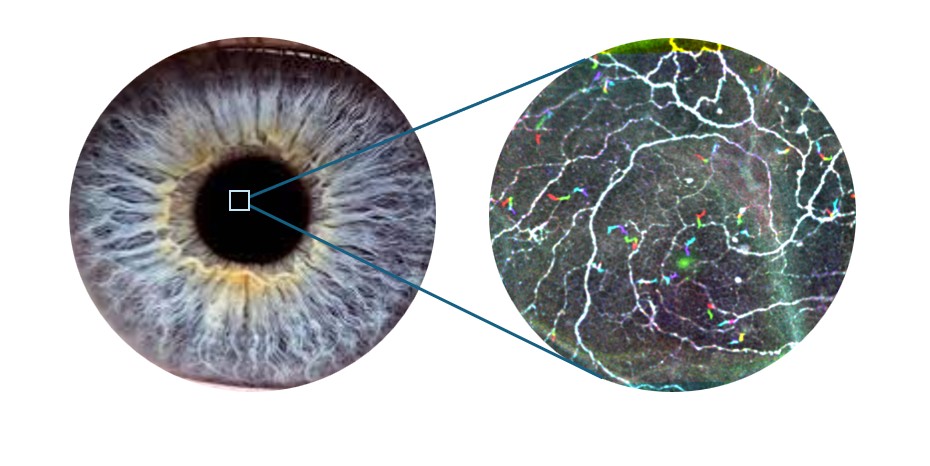
Image: Left, a close-up of a human cornea and right, microscopic immune cells within the cornea. Credit: Fun-IVCM.
The cornea – the clear outer layer of the eye – is one of the only places in the body where immune cells can be seen directly in living people, but previously scientists could only take still images of the cells.
Fun-IVCM captures individual cells moving in real time, providing important new insights including how immune cells behave in healthy humans and how they change as a result of disease.
With this knowledge the team hopes to be able to better detect and predict inflammatory diseases and monitor individual patient responses to new treatments that target the immune system.
Using the technique, the team has already upended decades-old thinking about the make-up of immune cells in the cornea, with their findings including the discovery that the healthy human cornea contains a wider variety of immune cells than previously thought.
Winners of this year’s Eureka Prizes, which feature 58 individual and team finalists across 19 categories, will be announced at an award ceremony in Sydney on Thursday 3 September.
Image at top: Weedy seadragon photographed as part of the SeadragonSearch citizen science project. Credit: Chrissy Tustison