

Emergence Ecotech brings damaged and degraded land back to life by combining state of the art seed enhancement technology with precision delivery systems.
Its comprehensive technology package offers a solution to meet market needs for large-scale ecological rehabilitation restoring native biodiversity, post-disturbance.
The three innovative technologies underpinning Emergence Ecotech were developed by researchers at UWA’s Centre for Engineering Innovation: Agriculture & Ecological Restoration (UWA CEI:AgER) and research scientists at the Botanic Gardens and Parks Authority (BGPA).
The research team collaborated with mining industry partners to trial the technologies in iron-ore and bauxite mined landscapes of the Pilbara and Jarrah Forrest regions of Western Australia.
In late 2024, UWA spun out a new company, ‘Emergence Ecotech Pty Ltd,’ to provide industry partners with commercial access to the technology.
We can provide a complete land restoration solution that significantly improves native plant establishment from direct sown seed, increasing seedling emergence from less than 5% to levels ranging between 40% and 80%.
Dr Todd Erickson, CEO
(Emergence Ecotech Launch, 2025)
THE CHALLENGE
LAND DEGRADATION
Globally, between 20-40 per cent of land (approximately 2.6 to 5.2 billion hectares) is degraded, according to the UN Global Land Outlook Second Edition 2022. In 2021, the UN declared the Decade on Ecosystem Restoration, a global call to action with the ambitious goal of restoring 1 billion hectares of degraded land by 2030.
In Australia, at least 52 million hectares of land is degraded, accounting for 5-10% of the global footprint.
The Western Australian Restoration Economy Report, 2023
Regulators of industries like mining expect companies to rehabilitate land upon mine closure, but there is lack of sufficient technology to deliver cost-effective and timely restoration of disturbed landscapes. Current methods for large-scale land restoration are inadequate.
Using non-native plants fails to restore critical biodiversity, and native land restoration has a very low success rate of plant establishment.
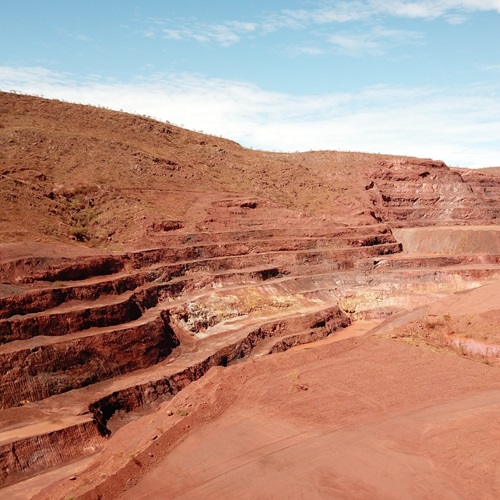
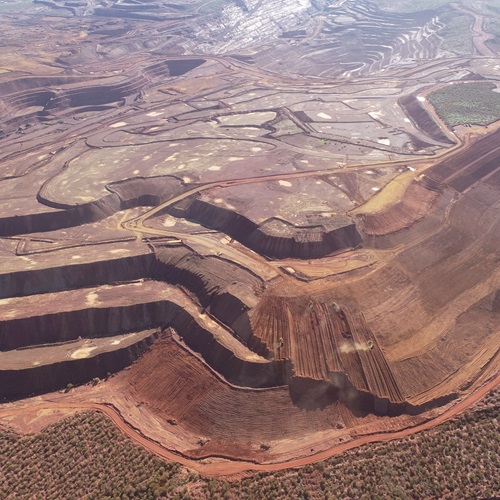
Image: Examples of degraded land, post-mining.
RE-VEGETATION OBSTACLES
The process for collecting, storing, distributing and coating native seeds is expensive and difficult, hindering re-vegetation of large areas of degraded land.
As climate change reduces the availability of viable seed stock, failure points are likely to be further stressed and therefore increasing the efficiency of seed performance in ecosystem rehabilitation for mined and agricultural landscapes is paramount.
“Even with the best information, current seeding practices and technologies frequently result in poor seedling establishment. In arid regions it is common that 90% or more of the broadcast seeds fail to produce a seedling. The loss of time, money, and seeds under these scenarios is considerable.”
Most native seeds, such as the dominant grasses and herbs of inland Australia (e.g. Triodia species, or ‘spinifex’), have ‘fluffy’ appendages including floral bracts, awns, surface hairs and/or bristles making them difficult to handle. Their bulk takes up space in storage facilities and transport trucks.
The appendages stick seeds together, which disrupts their flow through seed planting machinery. The appendages also make it difficult to apply coatings that improve germination.
Due to rocky, uneven and sloped landforms in the field, current mechanised seeding techniques used in large-scale rehabilitation and cropping experience significant limitations.
THE TECHNOLOGY
Our multidisciplinary science-engineering approach to machinery development enables us to tailor technology solutions to facilitate efficient native seed-based restoration and ultimately generate authentic resilient ecosystems.
Associate Professor Andrew Guzzomi
(Emergence Ecotech Launch, 2025)
SEED FLAMING
The Seed Flamer’s flash-flaming process repeatedly exposes seeds briefly to a flame under strict species-specific conditions. Benefits include:
• Precision removal of unwanted appendages (hairs, awns, lobes)
• Improved flow properties enabling mechanical seed delivery (smooth movement of seeds through mechanical seeders)
• Increased bulk density (decreased storage volume)
• No decrease in germination potential, with some species showing benefits.
The Seed Flamer is patented in Australia, US and Canada, and has been proven to work on over 20 restoration target species native to the Pilbara and south-west regions of Western Australia. It is also showing success with species in the US.
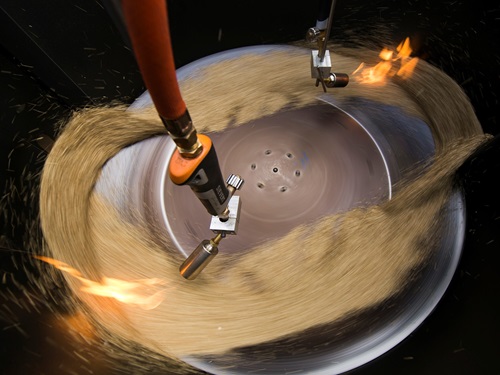

Image: (a) Patented Seed Flamer in action (b) Proven effective on a diverse range of species and seed morphologies.
PRECISION DELIVERY
The team designed, constructed, and field-tested direct seeding machinery that can accommodate and efficiently deliver diverse seed mixes including those that differ in shape, size and weight; and enhanced (primed, pelleted and coated) seeds, at multi-hectare scales and across multiple sites.
The Mega Sweeper (Patented in Australia and USA) can be attached to a bulldozer or tractor to traverse steep and rocky landscapes and provide precision delivery of native seeds. The machine sows seeds at optimal shallow depths by sweeping fine soil particles over seeded material and accurately meters native seeds using state-of-the-art metering control systems.
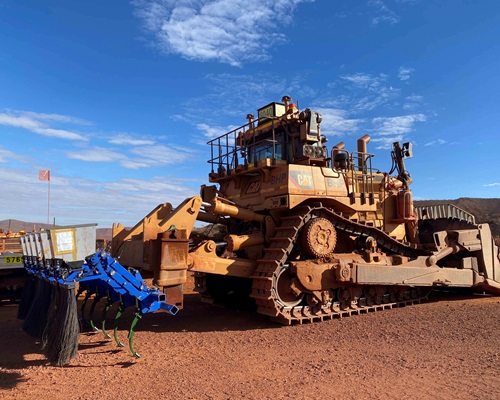
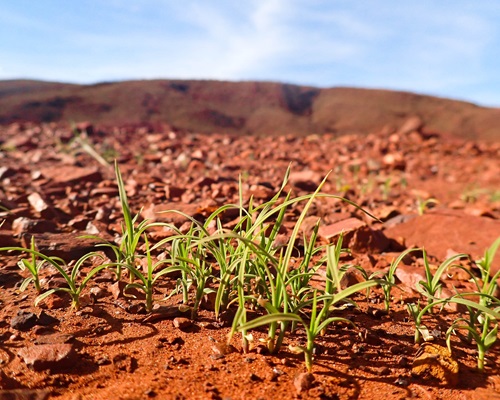
Image: The Mega Sweeper, designed to bury native seeds accurately at shallow depths in rocky and sloped terrains for large scale ecosystem rehabilitation.
The Mechanical Cow (patent pending in US and Australia) has been developed to address the challenge of seeding into environments with depleted and deficient topsoil.
The device delivers seeds embedded in a wet topsoil mixture to the soil surface, reminiscent of cow pats, accurately placing seeds to the right depth within an optimal topsoil microenvironment.
Topsoil is utilised efficiently, only where it is required surrounding the seed to make efficient use of this valuable resource.
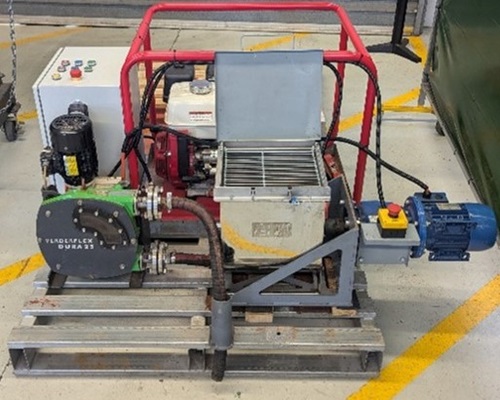
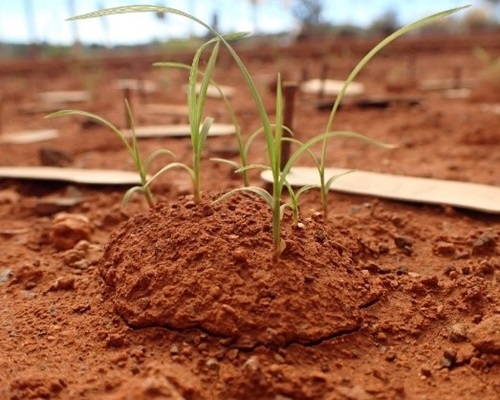
Image: The Mechanical Cow, designed to distribute seeds and topsoil efficiently to a site for maximum plant recruitment in degraded soils.
THE IMPACT
The complete land restoration solution is proven to restore biodiversity with significantly improved rates of native plant establishment from direct sown seed. Key benefits:
• Reduces scale, complexity and cost of land rehabilitation
• Promotes restoration of native ecosystems and biodiversity
• Eligible for both high integrity nature-based Australian Carbon Credit Units (ACCUs) and biodiversity certificates – making sound economic sense for degraded landowners.
Rates of seedling emergence from direct sown seed have increased from less than 5% to levels ranging between 40% and 80%.
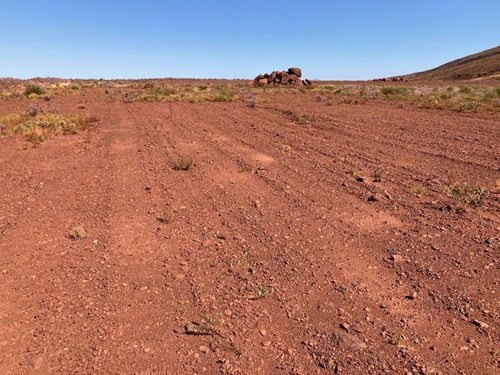
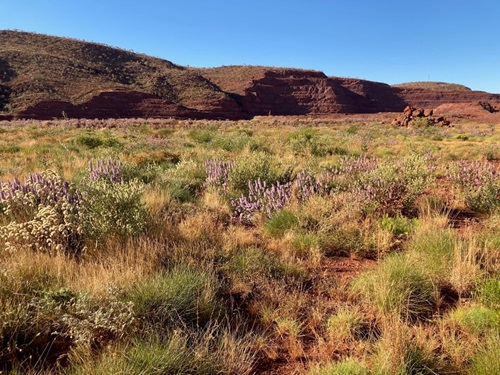
Image: Comparison showing (a) outcome of existing seeding methods and (b) outcome of combining the optimal seed enhancement technologies with precision seed placement.
LEAD RESEARCHERS AND FOUNDERS
Associate Professor Andrew GuzzomiFounding Director, UWA Centre for Engineering Innovation: Agriculture & Ecological Restoration (UWA CEI:AgER)
Director, Emergence Ecotech
WA Innovator of the Year (2016 and 2019)
Dr Todd Erickson
CEO, Emergence Ecotech
Ecological Restoration Theme Lead, UWA CEI:AgER
Dr Monte Masarei
Ecological Restoration Tech Theme Lead, UWA CEI:AgER
Director and COO, Emergence Ecotech
Botanic Gardens and Parks Authority (BGPA)
The technology was co-developed with research scientists at Kings Park Science.
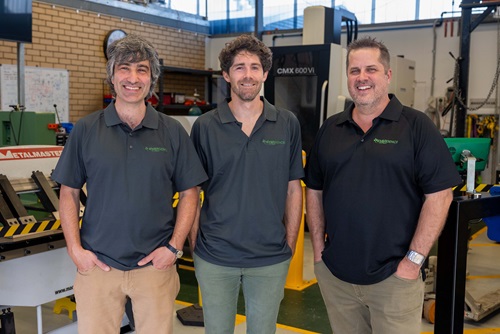
Image: The Emergence Ecotech team: A/Prof Andrew Guzzomi, Dr Monte Masarei and Dr Todd Erickson.
JOURNEY FROM IDEA TO IMPACT
2008
Research: Pilbara Seed Atlas Project (2008-2013), a collaborative research project between BHP, UWA and BGPA.“Ongoing industry support ... has ensured research in the Pilbara will continue to unpack and resolve the complex challenges associated with seed regeneration of biodiverse native plant communities after mining.” Erickson et al. 2017
2013
Research: Restoration Seedbank Initiative (2013-2018), a $5 Million research partnership between BGPA, BHP, and UWA.“Seed banks must shift from being “stamp-collections” of species to collections that can provide tons of seeds and the expertise to improve restoration efforts.” Merritt & Dixon, 2011
2014
Invention: Seed flaming technique invented by multidisciplinary team from UWA and BGPA.“We demonstrate that flash flaming is a highly effective and efficient means of removing floret appendages and subsequently improving geometry. Once flamed, the bulk density of florets was significantly increased, the application of polymer coatings was more effective, and germination was enhanced. The improved floret geometry through flaming therefore shows promise for enhancing the mechanization of direct seeding of grasses.” Guzzomi et al. 2016
2016
Award: The Seed Flamer wins the Emerging Innovation Category at the WA Innovator of the Year Awards.Publication: Pilbara Seed Atlas and Field Guide: Plant Restoration in Australia’s Arid Northwest is published.
2017
Research: Eco-engineering solutions to improve mine-site rehabilitation outcomes (2017-2021), an Australian Department of Industry, Innovation and Science’s Global Innovation Linkages Program led by BGPA with UWA, BHP, Rio Tinto, Greening Australia, Brigham Young University, University of Nevada, Natural Resource Conservation.“Mine rehabilitation is a complex, integrated process that involves multiple stakeholders, long-term commitment, and a comprehensive understanding of site-specific conditions ... From a perspective of initiating plant recruitment, best practice use of native seeds is fundamental, and seed technologies can also be coupled with the invention, development and modification of the seeding equipment needed to deliver seeds at scale.” Erickson et al. 2018
2018
Research: Innovative seed technologies for restoration in a biodiversity hotspot (2018-2025), Australian Research Council Linkage Program for collaborative research between UWA, BGPA, Heidelberg Materials Australia, and Brigham Young University.2019
Invention: Mechanical Cow and Mega Sweeper invented by Emergence Ecotech founders and Kings Park Science scientists.“Current mechanical direct seeding methods lack adequate control of seed sowing depth and spatial distribution ... To improve restoration success, engineering improvements to mechanical direct seeders used in large-scale restoration should focus in particular on addressing issues of precision of delivery for diverse seed types and landscapes.” Masarei et al. 2019
Research: Use of flash flaming, fungicide, abscisic acid treatments to improve seed delivery and establishment of Winterfat (2019-2021), a collaborative research project funded by the US Bureau of Land Management, Nevada Plant Conservation and Restoration Management Program.
2021
Centre: The Centre for Engineering Innovation: Agriculture & Ecological Restoration (CEI:AgER) is established at UWA by Founding Director Andrew Guzzomi.Patent: Australian Provisional Patents filed for Mechanical Cow and Mega Sweeper direct seeding devices.
Publication: Engineering seeding mechanisms to restore the mined landscapes, PhD thesis presented by Monte Masarei.
"We posit that a better meshing of traditional engineering disciplines and ecological restoration science is central to achieving environmental repair at the scale and pace required to combat globally ever-growing, human caused, land degradation and biodiversity loss.” Masarei et al. 2021
2022
Research: Australian Seed Scaling Initiative (2022-2025), a Cooperative Research Centre funded project for collaborative research between UWA, CRC TiME, Alcoa, and BGPA.Centre: UWA CEI:AgER formally launched by WA Science and Innovation Minister, the Hon. Stephen Dawson MLC.
2023
Research: Restoration Engineering Seed Technology Deployment Program (2023-2027), a $2m collaborative research program between UWA, BGPA and BHP.2024
Spinout: UWA incorporated the spinout company ‘Emergence Ecotech Pty Ltd’, in partnership with Biologic Seed, an established local company and subsidiary of Biologic Group.2025
Launch: Emergence Ecotech Pty Ltd is formally launched.Our research will provide industry partners access to technology that can bring damaged and degraded land back to life. With our company now formally up and running we are looking forward to working with industry to scale up biodiverse restoration.
Dr Monte Masarei
(Emergence Ecotech Launch, 2025)