
The Digitisation Centre of Western Australia held its 2025 Symposium in the State Library of Western Australia Theatre on the 9th of December 2025, opening discussions and engaging our audience with the current activities of the Centre. Guest speakers representing our partners and clients presented their work and collections that the Centre has assisted in digitising, which reflect WA’s unique culture and diverse communities.
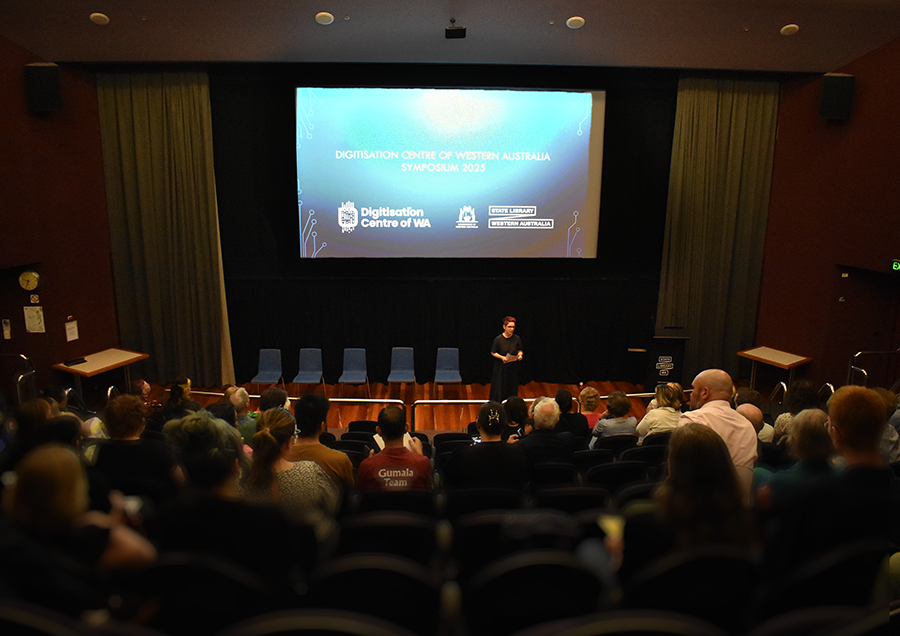
Image: Professor Helena Grehan opening the DCWA Symposium 2025 at the State Library Theatre.
Dr. Nonja Peters and Marjorie Bly co-presented regarding ‘Digitising the Migrant Paper Trail.’ Both are experts in Dutch-Australian heritage and shared their efforts in digitising the archives of the Dutch-Australians and post-war migrants and using the digitised materials in publications, exhibitions and commemorative events. The duo outlined the challenges in curating and preserving the digital files and plans for future projects.

Image: Dr Nonja Peters.
Sharon Woodgate-Outram from Murdoch University presented ‘The Good, the Bad, the Ugly, and the Weird,’ showcasing the University Library’s Special Collections through the Irene Greenwood Collection Project. The presentation detailed Greenwood’s family, personal life and career, and how the items digitised by the DCWA reflect the remarkable person Greenwood is known as today, a champion in women’s rights movement in WA and wider Australia.

Image: Sharon Woodgate-Outram.
Professor Clint Bracknell from the University of Western Australia (UWA) was the keynote speaker for the Symposium. As one of the Chief Investigators of the ARC linkage project, ‘Life After Digitisation: Future-Proofing WA’s Vulnerable Cultural Heritage’, of which the DCWA is a partner, he highlighted the existing gaps in the presence of Indigenous languages in digital platforms and media and revitalisation of those languages in communities, with the lack of access to Indigenous data and archival material as the major barrier. Professor Bracknell challenged the collection custodians in the audience to rethink their policies of collections access for the benefits of the Indigenous communities.
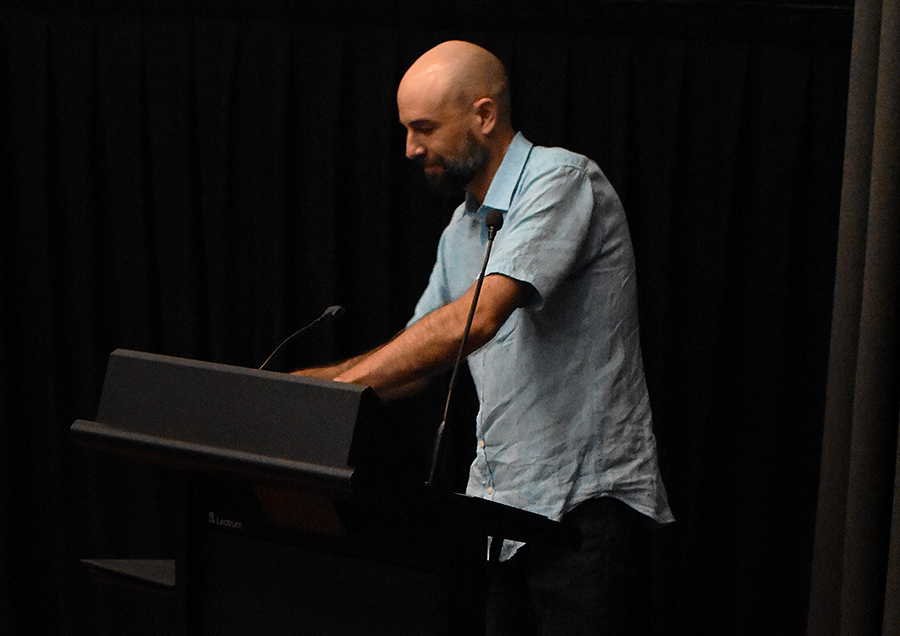
Image: Professor Clint Bracknell.
For the afternoon sessions, we were delighted to have Alex Stephenson and Chloe Czerwiec from UWA, Jessica Marantelli from the Subiaco Museum, and Andrew Kelly and Catherine Belcher from the State Library of Western Australia sharing more about the projects that are supported and assisted by the DCWA.

Image: Digital Collections of Subiaco Museum
‘Connecting across time: Digitisation and the language revitalisation journey’: as more and more materials are digitised, WA Aboriginal language centres are also exploring different ways to engage with the digitised materials to revitalise WA’s endangered Indigenous languages. Hopefully these projects can expand beyond their base towns and cities.
‘From Fragile Photographs to Global Access: Digitising Heritage at Subiaco Museum’: since 2021, Subiaco Museum has worked on a long-term project and collaborated with DCWA to digitise the Museum’s collection, compiled of various types of records and media, with the aim of facilitating Museum patrons’ access to the collections whilst reducing the handling of the fragile physical originals. The project has achieved positive outcomes, and high-quality images are uploaded to Collections WA for public access.
‘Collected with copyright in mind’ introduced UWA Collected, the University’s digital asset management system and home for the collections digitised by the DCWA, and the complexities in managing UWA collections in different copyright statuses.
‘Digitisation is Forever’: a great session on the efforts and commitments of the State Library of WA in preserving the state’s at-risk audio-visual collections and their learnings over the course of managing ever-growing digital collections in the AI era.

From left to right: Assoc. Prof Celeste Rodrigues Louro, Mr Scott Nicholls and Ms Catherine Belcher in a panel discussion.
The final event of the day was a discussion panel featuring Professor Celeste Rodríguez Louro and Scott Nicholls from UWA, Professor Hamid Laga from Murdoch University, and Catherine Belcher from the State Library.
The panel discussion opened an opportunity for the audience to respond and participate in the topics of artificial intelligence in the context of digitisation and management of digital collections, the potential benefits and risks of the use of AI.
Questions asked primarily revolved around the negative impacts of AI such as environmental footprints, potential job cuts and organisational restructures, socio-psychological health, and human-machine relationships. As the looming uncertainty still holds, our panellists encouraged the audience to use AI more intentionally with full exercise of their agency. AI can be a useful tool if they are employed under the appropriate settings.
The 2025 DCWA Symposium outlined the triumphs and challenges in digitising and preserving WA’s rich cultural heritage. We extend a heartfelt thanks to our speakers and participants and look forward to another year of growth ahead for the DCWA!

Image: DCWA Team and Participants of DCWA Symposium 2025
For more information about the Digitisation Centre of WA, visit us at www.dcwa.au or follow us on LinkedIn.