
Against a backdrop of shifting climate conditions, nutritional challenges, and energy scarcity in sub-Saharan Africa, PhD student Annuarite Uwera is working to improve a crop that plays a vital role in regional diets: the common bean.
“My research aims to fill a gap in bean breeding program by addressing the need to develop biofortified bean varieties that are fast cooking and resistant to drought,” explained Uwera.
Based at The UWA Institute of Agriculture and supported by a John Allwright Fellowship from the Australian Centre for International Agricultural Research (ACIAR), Uwera is researching how different common bean types cope with drought by focusing on cooking time and levels of iron and zinc.
“Young African scientists like me play a significant role in reshaping the continent’s food systems by driving research and innovation.”
PhD student Ann Uwera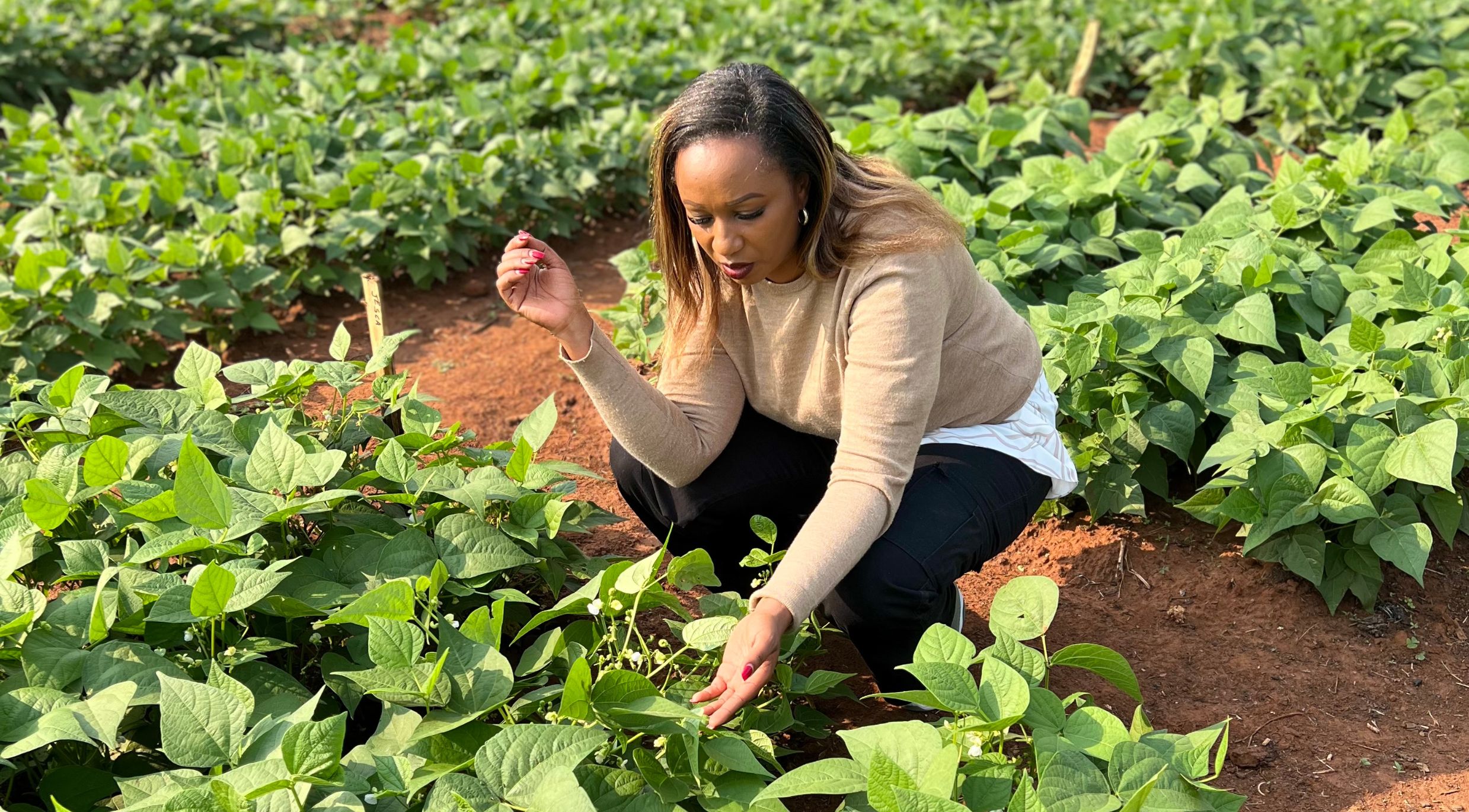
Her research is part of a broader international initiative led by ACIAR in collaboration with CIAT-Bioversity and national partners across six African countries. In Rwanda, field trials are underway in three districts that reflect a range of agroecological conditions, including variations in soil and rainfall.
Cooking time is a critical factor in resource-limited settings. “Cooking time in common beans is an important trait as in developing countries like Rwanda, cooking foods accounts for approximately 90% of total household energy consumption with wood being the primary fuel source,” she said. “Nowadays, there is an increasing demand for foods that are faster and easier to cook.”
Uwera also emphasises the nutritional dimension. “Malnutrition and stunting remain a serious problem in developing countries. There is a need to develop nutrient dense crops like biofortified beans,” she explained. Beans, she notes, are a staple in Rwanda and often referred to as the “meat for the poor” due to their protein and micronutrient content.
The potential impact of her work is far-reaching. “Identify drought tolerant biofortified bean genotypes will reduce the risk of low productivity for farmers growing beans under water limited conditions”, said Uwera. She highlights that if drought does not affect negatively the nutrient content, farmers and consumers will benefit from biofortified beans that will help them fight malnutrition and hunger.
She credits her progress to teamwork. “Collaboration has played a vital role in the progress and success of my research so far. Working with technicians and scientists from various fields and institutions has helped me gain a deeper understanding of my research.”
Looking ahead, Uwera believes the next generation of African researchers is essential to agricultural transformation. "Our work ensures that research outcomes are translated into practical solutions that strengthen and develop the food systems across the continent and beyond".
Media references
Ana Mendigutxia Balil (Communications Officer, The UWA Institute of Agriculture) +61 08 6488 1650