
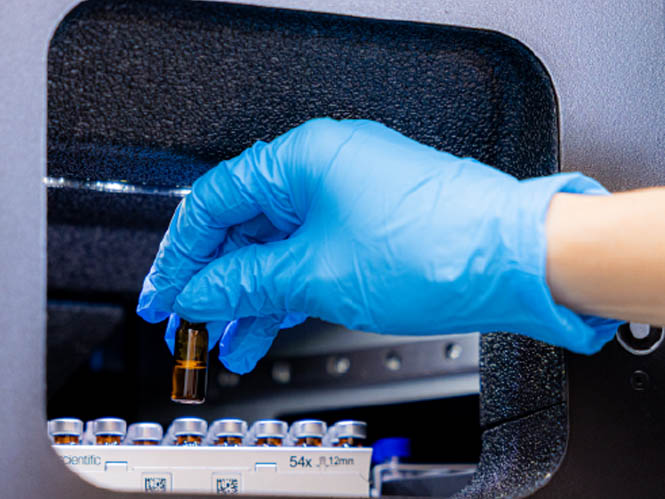
Separation Science and Mass Spectrometry Platform
The UWA Separation Science and Mass Spectrometry Platform (SSMSP) provides advanced chromatography (gas and liquid) with mass spectrometry to analyse diverse mixtures and small molecules. It supports researchers, collaborators and industry across chemistry, life sciences, materials science and environmental science, with additional capabilities in greenhouse gas analysis, radiolabelled compounds and thermogravimetric applications.
What can SSMS Platform do?
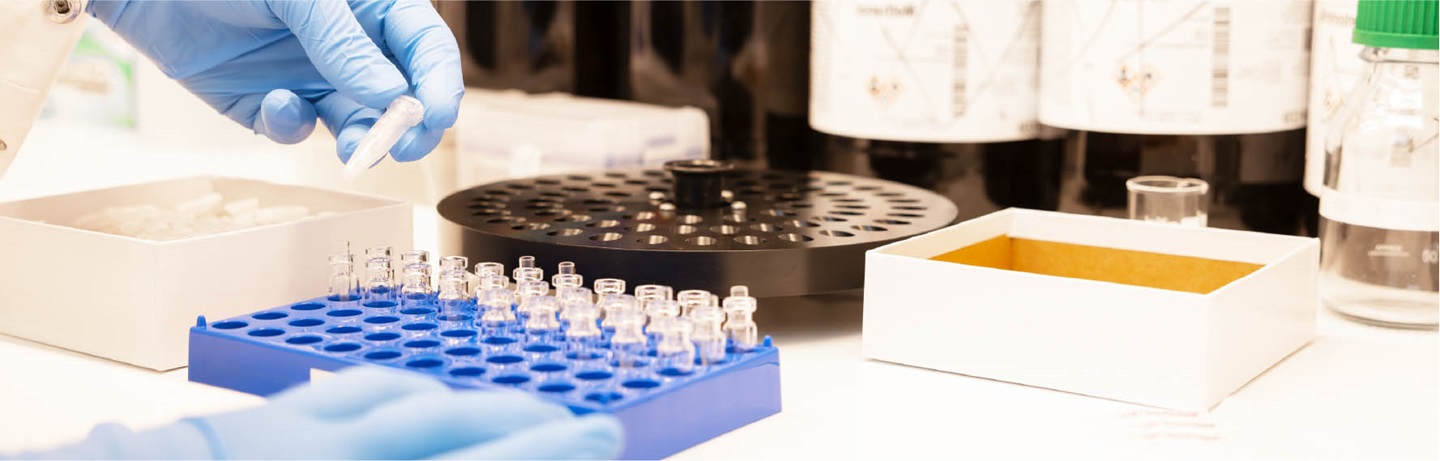
Separation Science and Mass Spectrometry Platform (SSMSP) enables the identification and measurement of a wide range of chemical compounds in complex samples, supporting analysis of small molecules, metabolites, environmental contaminants, and natural products across diverse research areas. By combining chromatographic separation with mass spectrometry, the platform can resolve complex mixtures and provide detailed information about molecular composition and structure, allowing researchers to detect trace compounds, compare samples, identify new and novel compounds and investigate chemical changes and interactions. It supports both qualitative and quantitative analysis, helping researchers understand what is present in a sample, how much is there, and how it behaves.
Our instruments
Gas Chromatography (GC)
Gas chromatography is used to separate and measure gases and easily vaporised chemicals, making it ideal for analysing air, environmental samples and volatile compounds.
Instruments:
- Gas Chromatography Greenhouse gas - Shimadzu Nexis GC-2030
- Gas Chromatography Mass Spectrometry (GCMS) - Agilent GCMS 8890 GC + 5977C MSD
- Gas Chromatography Mass Spectrometry (GCMS) - Shimadzu QP2010
Gas Chromatography–High Resolution Mass Spectrometry (LC‑HRMS)
Integrates gas chromatography to separate volatile compounds with high-resolution mass spectrometry to measure their masses with exceptional accuracy.
Instruments:
- Gas Chromatography High Resolution Mass Spectrometry (GCMS, HiRes) - Thermo Q Exactive Orbitrap with TriPlus RSH
Liquid Chromatography (HPLC/LC)
Liquid chromatography separates dissolved compounds in liquid samples, commonly used for analysing pharmaceuticals, natural products, foods and biochemical mixtures.
Instruments:
- Waters Arc/PDA/ELSD/QDa
Liquid Chromatography–High Resolution Mass Spectrometry (LC‑HRMS)
LC‑HRMS combines liquid chromatography with high‑accuracy mass spectrometry to identify complex mixtures and trace‑level chemical components with exceptional precision.
Instruments:
- LCMS, HiRes - Thermo Orbitrap Exploris 120
- Liquid Chromatography High Resolution Mass Spectrometry (LCMS, HiRes) - Waters LCT Premier QToF
Thermal & Evolved Gas Analysis
Thermal analysis measures how solid materials behave when heated, including changes in weight, heat flow and the release of gases—essential for studying stability, decomposition and material properties.
Instruments:
- Evolved Gas: Simultaneous Thermal Analysis, Netzsch STA 449 F5 coupled to Agilent GCMS
- DSC: Differential scanning calorimetry, Netzsch 300 Caliris
- TGA: Simultaneous Thermal Analysis, Netzsch STA 449 F5
Can't find what you're looking for?
Contact us and one of our experts will get back to you.
FAQ
-
Who can use the equipment?The Platform is open-access and available to any researchers with an interest in using LC and GC. Most users operate the instruments themselves, after registration and training, but samples can be submitted for analysis by Platform staff. Industry users are also able to access the facility in the same way.
-
How do I get started?
Get in touch with us first to discuss your project, samples to be analysed, instrument, methods and access needs at [email protected]
-
What are my sample requirements?
Sample requirements are project dependant. Please contact our team [email protected] to discuss specific requirements.
-
How much does the service cost?
Project costs depend on the type and scope of analysis, required services and any customised method development. As a research‑focused platform, we tailor pricing to each project, with supportive rates for academic and collaborative partnerships. We’d be happy to discuss your goals and talk through pricing and options together.
-
How do I know which analytical technique or instrument is right for my projectPlatform staff can help assess your sample type, research question and analytical requirements to recommend the most suitable chromatography or mass spectrometry system. Platform staff can also advise on suitable methods, be they off the shelf based of need for method development for your specific needs.
-
Do I need prior experience with chromatography or mass spectrometry to use the equipment?
Whilst previous experience will allow for greater productivity earlier, Platform staff are available for full hands-on training and assistance with method development for your project/application. Please contact us to discuss how best we can assist you in your research.
-
Can SSMSP help interpret results?
Clarify the level of analytical support, data interpretation, and consultation offered.
We offer service options which can vary from end-to-end project design to reporting, or just include discrete services such as sample analysis on the instrumentation only and provision of raw data.
-
Can SSMSP help develop customised methods?
Platform staff have experience with research and development plus validation of methods to support your needs for customised application of analysis.
-
What types of samples can SSMSP analyse?With both LC and GC instrumentation, sample types applicable to our instrumentation covers, liquids, solids and gases, including headspace capabilities. Sample types such as plant extracts and root exudates, food, water, soil, air for greenhouse gas, headspace for volatile organic compounds, 14C labelled compounds such as herbicides, are all suited to our instrumentation.
-
Can you help with sample preparation?
The SSMSP is primarily an end of preparation focused facility, in that we can provide in depth advice on sample preparation but do not have extensive facilities to undertake this work on large scale. We do, however, have online capabilities for GC-HRMS using the TriPlus Robotic Sample Handler, for derivatisations and dilutions.
-
What safety requirements or documentation do I need?
All registered users of the Platform must first undergo a site-specific lab induction and show competency when given hands on training in use of an instrument before they are allowed access to the Platform.
-
What turnaround times should I expect?
For set applications we offer as a standard service, turnaround time is usually 3-4 weeks.
For more complex work, turnaround times will depend on the degree and complexity of method development and validation that is first required before providing an application suited for an analytical service.
-
How much does analysis or instrument access cost?
Costing for instrument access and/or staff assistance is determined by user eligibility. Internal UWA rates apply to UWA staff and students where research funding is administered by UWA. Associate rates are available to Australian publicly funded researchers and government organisations. GST will be applied where applicable. Users may pay for instrument access on an hourly basis or pre pay for a block of hours or subscription at reduced rates on a sliding scale. Commercial rates are determined by platform staffing and instrument requirements, and formal quotes will be provided for all industry sponsored or commercial projects.
-
Can SSMSP support industry partners or commercial projects
The SSMSP has capacity to support industry sponsored or commercial projects where such work does not impose of the support for internal UWA research projects. The SSMSP is also open to discussion for collaborative work for scientific research output in way of peer-reviewed publications.
-
Do I need to acknowledge SSMSP in my publications?
All work undertaken with input of Platform staff, use of instrumentation and/or provision of services should acknowledge the support of the UWA Separation Science and Mass Spectrometry Platform in publication of data via research papers, thesis or reports.
-
What are your operating hours?The platform is open for controlled access from 8am to 5pm each weekday. Access out of these hours may be arranged if deemed necessary for instrument operation, but only with the permission of platform staff.
Platform experts
Greg Cawthray
Manager (Separation Science & Mass Spectrometry Facility)

Meera Mistry
Scientific Officer
Contact information
-
Contact
-
Manager: Greg Cawthray
General email enquiries: [email protected]
-
Address
- Bayliss Building (M310)
The University of Western Australia
Crawley (Perth) Campus
35 Stirling Highway
Perth WA 6009
Australia