
The Kimberley Mums’ Mood Scale (KMMS) project has been recognised among the ‘10 of the Best’ research projects funded by the National Health and Medical Research Council (NHMRC).
The project was celebrated at a ceremony in Canberra yesterday for its depth, diversity, and impact.
KMMS is a holistic and culturally appropriate perinatal mental health screening tool developed for and by Kimberley Aboriginal women and driven by researchers from the Rural Clinical School of WA (RCSWA) and Kimberley Aboriginal Medical Services (KAMS).
The tool is helping health professionals better understand a perinatal woman’s context and what supportive protective factors exist for her. It builds a profile that explores a woman’s strengths and resiliency alongside her perinatal mental health risks.
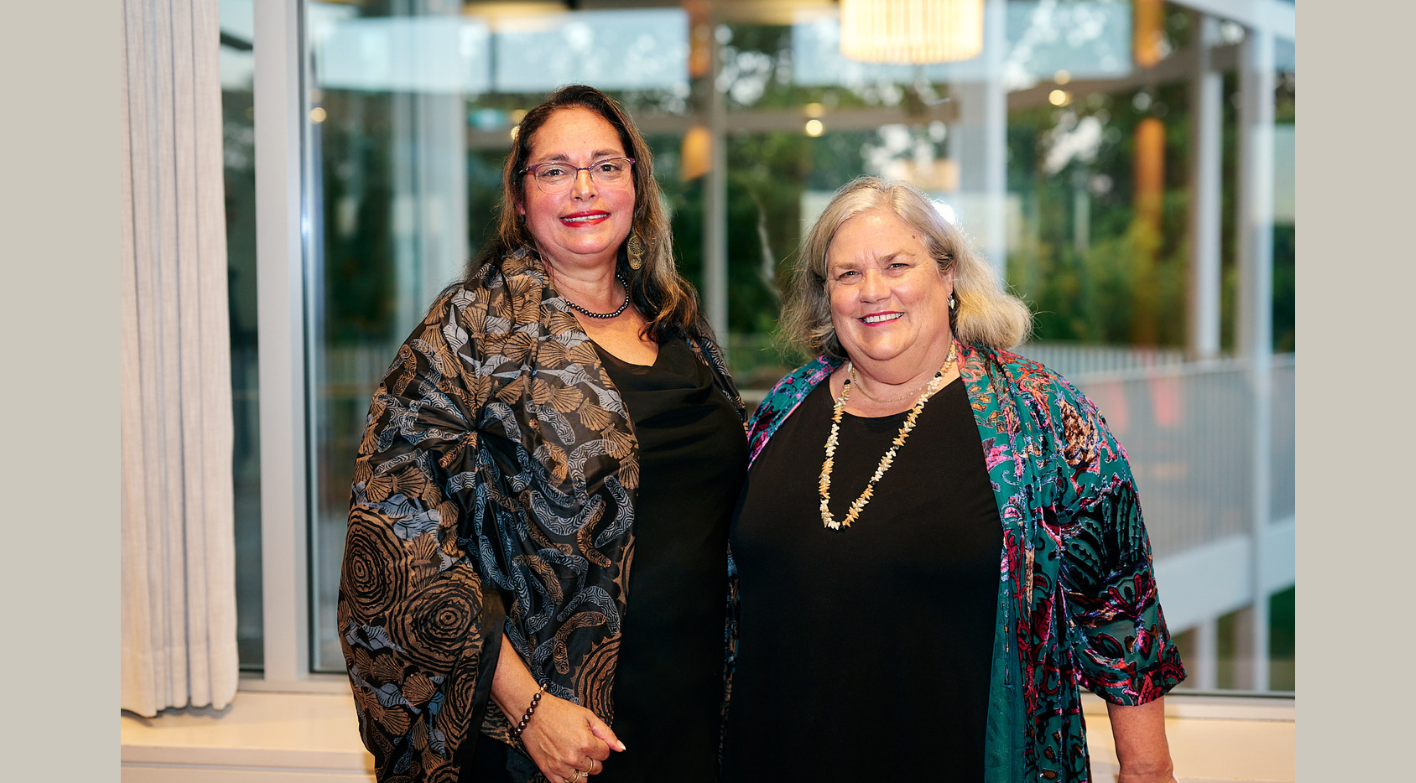
Image: KMMS researcher Erica Spry and Professor Catherine Chamberlain at the NHMRC ceremony in Canberra, 31 March 2026.
RCSWA Research Fellow and KAMS Senior Aboriginal Research Officer Erica Spry said the research team including Emeritus Professor David Atkinson, Senior Research Fellow Dr Emma Carlin, and Professor Julia Marley felt genuinely honoured to receive the recognition.
“This recognition reflects the strength of Aboriginal-led research and the generosity of the Aboriginal and Torres Strait Islander women, Aboriginal Community Control Health Services and communities who have shaped this work and continue to walk alongside us,” Ms Spry said.
“The KMMS integrates our practices of storytelling, listening, yarning and genuinely connecting with a woman to learn her strengths and challenges. Women have reported that they finally feel heard, seen, supported, and not just treated like a patient or number as they work through the KMMS.”
Since 2018, a study implementing the KMMS into routine primary health care practice has been supported by KAMS, WA Country Health Service - Kimberley, and RCSWA.
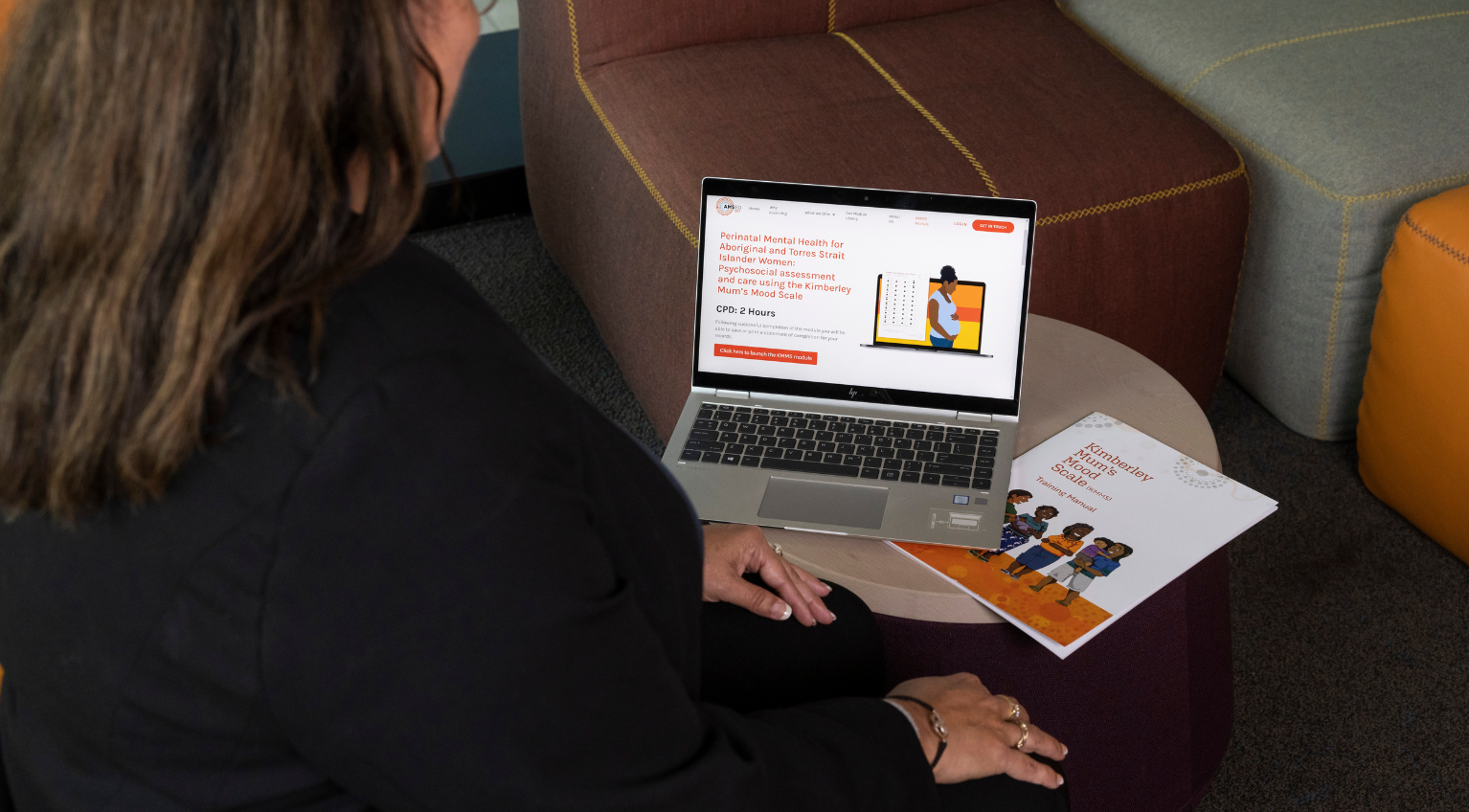
Image: Erica Spry with the KMMS training module for health professionals.
Ms Spry, a Bardi Jawi traditional owner, said implementation meant making sure the KMMS was owned locally, culturally grounded and sustainable beyond the life of the research.
“While the tool has strong evidence behind it, our work centred on what it actually takes to embed it into routine care within health services and change clinical guidelines.
“We focused on strengthening data systems, workforce training, and referral pathways so the KMMS can be sustained long term.
“We are also exploring how implementation lessons from the Kimberley can inform other regions while still respecting local cultural governance and contexts,” she explained.
The team is currently evaluating the impact of the KMMS in the Kimberley and Pilbara regions and Far North Queensland.
Find out more about the KMMS here
Read NHMRC 10 of the Best – 17th Edition here. It features projects funded between 2016 and 2022.
We gratefully acknowledge the following research contributors and partners:
Dr Catherine Engelke
Dr Stephanie Trust
Dr Jaye Kotz
Ms Katherine Ferrari
Ms Melissa Williams
Professor Mark Wenitong
Professor Karen Edmond
Professor Ernest Hunter
Professor Rhonda Marriott
Professor Yvonne Cadet James
Ms Jo Neville
Ms Diana Jans
Associate Professor Sandra Campbell
Kimberley Aboriginal Medical Services
WA Country Health Service
Mawarnkarra Health Service
Apunipima Cape York Health Council
NT Health Department (Gove Hospital)
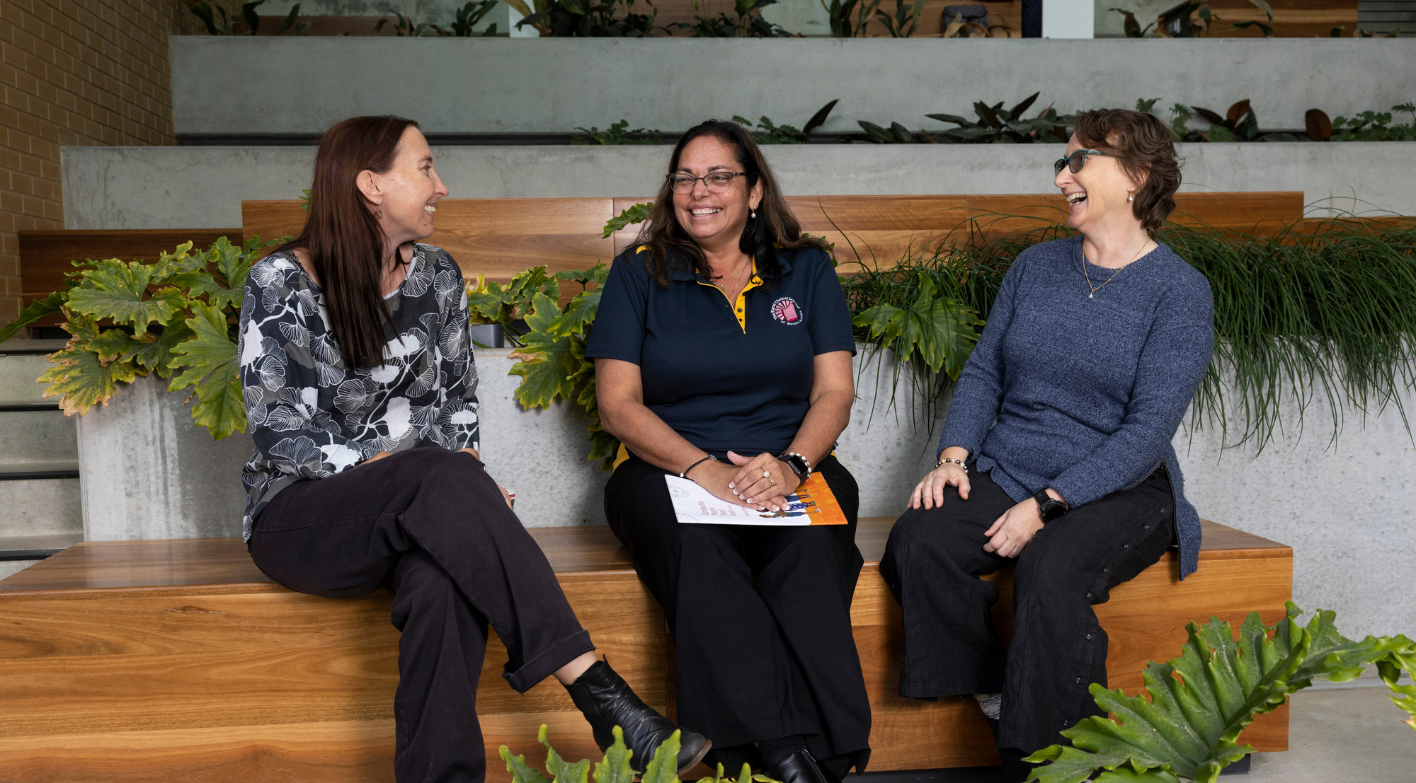
Image: KMMS researchers from left, Dr Emma Carlin, Erica Spry and Professor Julia Marley.