The Rural Clinical School of WA (RCSWA) is one of only three rural clinical schools in Australia to offer both penultimate and final year rural training programs for medical students.
Established in 2019, in response to student demand, the RCSWA Final Year program has since welcomed a total of 127 students to sites in Broome, Geraldton, Bunbury, Albany and Kalgoorlie.
A record 22 students were accepted into the program in 2025 from The University of Western Australia, The University of Notre Dame Australia and Curtin University.
Students complete the requirements of their home university’s curriculum and assessment using the clinical opportunities at their rural site.
The program ultimately aims to improve a student’s transition to rural internship by placing them with health services that provide emergency medicine, general surgery, musculoskeletal, ENT, geriatrics, palliative care, psychiatry and general practice, and with medical mentors who can assist them to secure employment with the WA Country Health Service (WACHS).
RCSWA Head of Division Associate Professor Andrew Kirke said the program had been a runaway success since its inception, with demand exceeding the number of places currently funded by the Australian Government.
“Just as our program has grown from four students initially to 22 students today, WACHS has increased the number of its internship positions from five in 2020 to 35 in 2025,” Associate Professor Kirke said.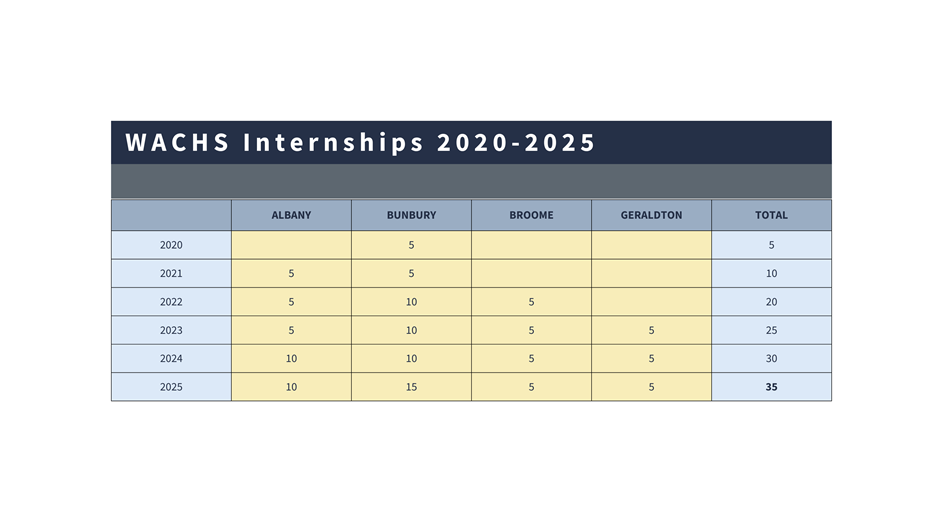
“Some 15 of our final year graduates in 2024 applied and were accepted for rural internships this year, which is testament to their significant commitment to rural medicine and the quality of our clinical training and mentorship.”
A student’s rural background is also rated highly upon application to RCSWA as rural background, rural interest and rural exposure during medical training have all been associated with increased likelihood of students entering rural practice after graduation.
Associate Professor Kirke said the school’s priority now was to secure funding to expand Final Year student numbers and sites from 2027 to take up the growing number of WACHS internships available.
“Ongoing funding is urgently required for RCSWA to continue to expand the Final Year program,” he said.
“Our costs have increased across the board but especially for clinician salaries, rural travel and accommodation bursaries. Final year students must source private accommodation which is an ongoing challenge at our remote sites.”
Despite the challenges, Associate Professor Kirke said he was confident that the future of rural clinical schools in Australia was bright, and schools like RCSWA would continue to give the best possible immersive experience to students and draw many of them back as rural doctors.
RCSWA final year student testimonials 2019 - 2024
“Thank you to all the staff who have made final year RCSWA possible. I have no doubt that doing RCSWA penultimate and final year has made me a better future doctor academically, has improved my confidence and has made me an all-round better clinician.”
“The quality of teaching and learning opportunities is unmatched. The ability to have regular tutorials with consultants is invaluable. Also being in a small group has huge benefits, particularly with exam time. I feel better prepared clinically than perhaps I would have if I had gone back to Perth.”
“I felt welcomed at all rotations, and due to usually being the only student on teams, I had amazing exposure to a pre-internship level.”
“I had fantastic teaching on site, close friendships with colleagues, and a close-knit hospital support group. Junior doctors were extremely helpful for exam prep knowing there was a small student group.”
“I love the work/life balance, short travel time to and from the hospital, and the outdoor activities in the region. Also, the flexibility in placement rotations and fantastic teaching by registrars and consultants in the hospital, and the JMOs being very welcoming and happy to share insights into rural careers as a junior!”
“It's awesome! Expand the program please!!”
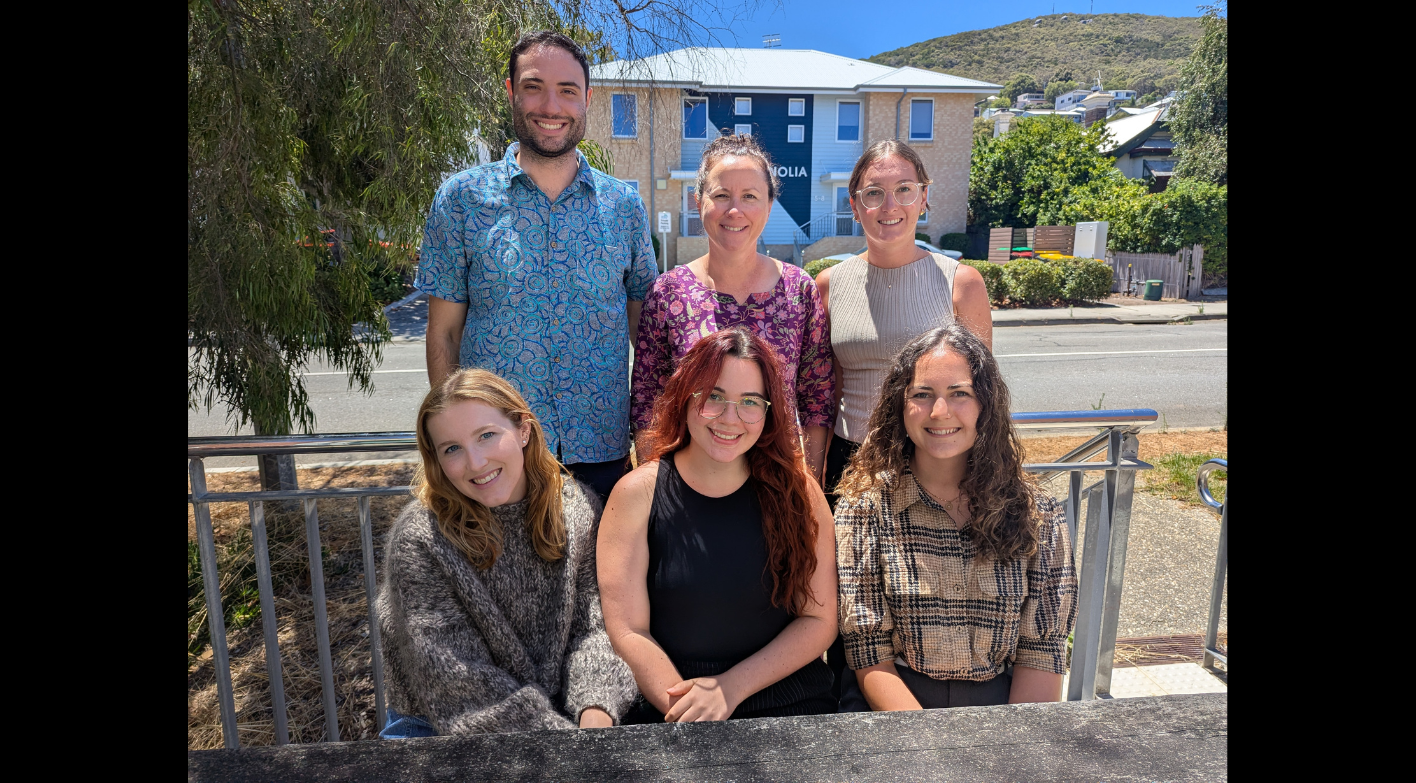 Image: Albany Final Year 2025 students with Medical Coordinator Dr Carly Roxburgh (top row, centre).